

Sonohysterography (also called saline infusion sonography/SIS) is an ultrasound investigation that provides additional details about the uterine cavity when standard transvaginal ultrasound cannot sufficiently clarify certain changes. In infertility practice, it can play an important role in evaluating the uterus before steps such as In Vitro Fertilization (IVF), to reduce the risk that an intracavitary problem goes unnoticed.
In searches, the main interest is often related to cost (including phrased as “sonohysterography price”), but the correct decision is also supported by clinical context: when it is useful, how it is performed and what the result means for the treatment plan.
What Sonohysterography Is and What It Can Show
Sonohysterography is a transvaginal ultrasound in which the uterine cavity is gently “opened” by introducing a small amount of sterile fluid, to better outline the endometrium and the cavity walls. The goal is to increase accuracy in identifying certain causes that may affect implantation or generate abnormal bleeding.

Usually, the investigation can point toward:
- endometrial polyps;
- submucosal fibroids (especially those that deform the cavity);
- intrauterine adhesions (synechiae);
- shape abnormalities of the uterine cavity;
- endometrial changes that require additional clarification.
In many situations, the starting point remains transvaginal ultrasound and sonohysterography is recommended when a more detailed evaluation of the uterine cavity is needed, without moving directly to an invasive procedure.
Sonohysterography: Price and What Is Usually Included in the Fee
The question “sonohysterography price” arises naturally, but cost can vary depending on what the service actually includes and the type of evaluation recommended. In practice, fee differences appear mostly between a standard investigation (for the uterine cavity) and investigations that also include evaluation of the fallopian tubes.
Usually, the fee for sonohysterography may include:
- transvaginal ultrasound assessment;
- consumables (catheter, sterile materials);
- the distension medium (usually sterile fluid);
- medical interpretation and conclusions recorded in the result.
Cost may be influenced by factors such as case complexity, the need for additional evaluation within the same appointment, the type of technology used (for example, 3D mode in certain indications) and the clinic’s specific protocols.
When there is suspicion that fallopian tube assessment is also useful (for example, in infertility), the physician may recommend a dedicated investigation such as sono-hysterosalpingography (HSG), which pursues a different objective and may have a separate fee.
When Sonohysterography Is Recommended
Recommendation is always made according to symptoms, medical history and the objective of evaluation. In practice, sonohysterography may be especially useful in the following situations:
- In infertility evaluation, when a more precise analysis of the uterine cavity is desired before treatment and monitoring stages. In this context, it can complement information from standard ultrasound and guide next steps (for example, whether hysteroscopy is needed).
- In the presence of abnormal uterine bleeding or suspicious ultrasound findings, to better differentiate between a polyp, submucosal fibroid, endometrial thickening or other situations requiring clarification.
- After certain intrauterine interventions or when intrauterine adhesions are suspected, especially if menstrual changes or difficulty conceiving occur.
- In certain cases, it may be a “triage” step before a procedure such as hysteroscopy, when the physician wants additional imaging confirmation.
Cycle Timing and How Preparation Is Done
The optimal timing is chosen so that the endometrium can be evaluated correctly and the risk of overlaying interpretation onto normal cycle variations is reduced. Usually, the investigation is scheduled after menstruation and before ovulation, but the exact recommendation is established individually.
Preparation depends on context. In some situations, the physician may request pregnancy exclusion, evaluation of an infectious risk or review of recent tests. If there are symptoms suggestive of infection (pelvic pain, altered discharge, fever), the investigation is postponed until the cause is resolved, because patient safety comes first.
Before the procedure, a mild analgesic or an antispasmodic may be recommended, depending on discomfort threshold and clinical particularities, but this approach remains at the physician’s indication.
How Sonohysterography Is Performed, Briefly
The procedure is performed in an outpatient setting, with variable discomfort, usually comparable to a menstrual cramp. A speculum is inserted, a thin catheter is positioned through the cervix, then transvaginal ultrasound is performed while sterile fluid is gradually instilled.
Duration may be short, but exact time depends on anatomy, tolerance to the procedure and the objective of the investigation. After the procedure, mild cramps and a small amount of vaginal leakage may occur, usually for a short period.
Signs for which contacting the physician is recommended (especially if persistent or intense) include significant pain, fever, chills or heavy bleeding.
Sonohysterography vs HSG and “Tube Checking” in Infertility
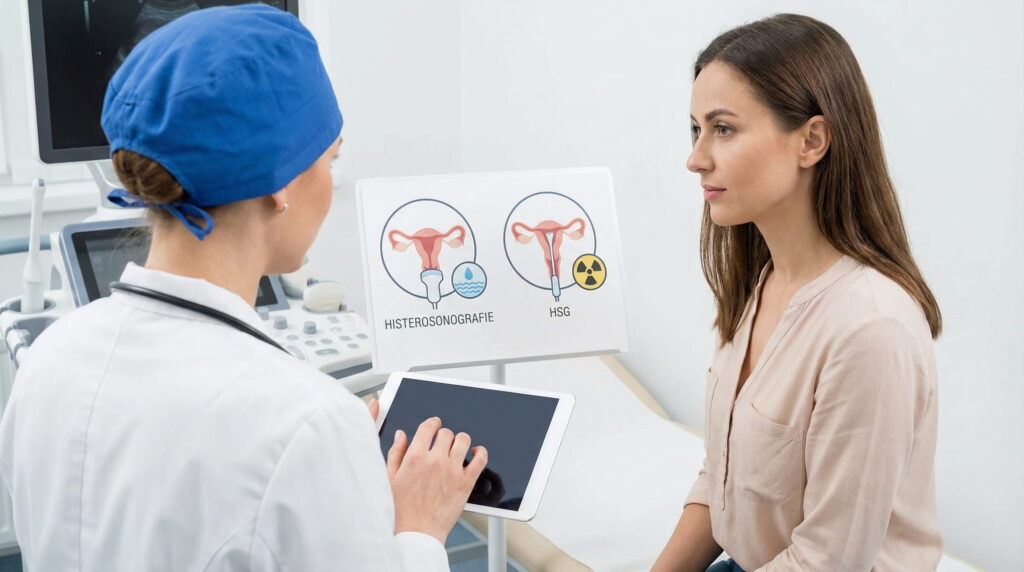
In everyday language, “tube checking” may mean different investigations and the choice depends on the main clinical question. Sonohysterography is primarily oriented toward the uterine cavity. If the objective is fallopian tube evaluation (patency), recommendation may move toward HSG/sono-HSG, depending on indication and availability.
Within this framework, the treating physician’s perspective on treatment steps and the fertility plan can also be useful. To complement information about options and stages, resources such as the complete IVF guide can help in understanding the medical pathway when reaching this stage.
When discussing the alternative of tubal evaluation, there may be differences in technique and objective and management is individualized. In certain situations, the physician may recommend investigations or similar services within associated medical ecosystems, such as sono-hysterosalpingography (HSG), depending on the case and clinical flow.
“You deserve to be heard, seen, treated with respect and supported throughout your life.”

Andreas Vythoulkas
Specialist in Obstetrics and Gynecology


The Result: What It May Mean and What Usually Follows
Sonohysterography results are interpreted in the context of symptoms, history and the objective of evaluation. A “within normal limits” result suggests a uterine cavity without evident intracavitary lesions and may allow continuation of the established plan for infertility or symptom management.
If an endometrial polyp is identified, confirmation and removal are usually discussed, most often via hysteroscopy, especially when there is infertility, abnormal bleeding or recurrence.
In the case of a submucosal fibroid, next steps depend on size, location and degree of uterine cavity distortion. In some cases, additional evaluation and a targeted therapeutic approach are recommended, especially when there is an impact on bleeding or fertility.
When suspicions of intrauterine adhesions or shape abnormalities arise (for example, a uterine septum), confirmation through additional methods may be indicated and, if needed, correction within a guided procedure.
In infertility, conclusions are integrated into the therapeutic plan. For a patient-oriented perspective on what this stage can mean, a dedicated resource such as the IVF patient experience may also be useful, explaining in accessible terms what the process involves beyond the strictly medical component.
At the same time, for patients already being followed within a treatment protocol, a structured presentation of options can also be found in pages such as IVF, when a quick reference regarding stages is needed.
Frequently Asked Questions
How much does a sonohysterography cost?
Cost can vary depending on what the service includes and the objective of the investigation. Usually, the fee covers the ultrasound assessment and consumables, but there are situations where complementary investigations may be needed with a separate fee. The most appropriate recommendation starts from clinical context and the medical question being addressed.
What is usually included in the price of sonohysterography?
Usually, transvaginal ultrasound, sterile consumables and interpretation of the result are included. In certain cases, additional components may exist (for example, extended evaluations or recommendations for additional investigations), which is why it is useful to clarify the service structure at scheduling.
Does sonohysterography hurt?
Discomfort is variable, but most often it is described as a mild to moderate menstrual-like cramp. The procedure is usually short and the physician can adjust technique to reduce unpleasant sensations. If there is increased sensitivity or anxiety, simple comfort measures can be discussed in advance.
On which day of the cycle is it performed?
Most often, it is recommended after menstruation and before ovulation, when the endometrium allows clearer interpretation. The exact day is established depending on cycle length and the reason for the investigation. In irregular cycles, scheduling is individualized.
Can it be done if there is bleeding?
If bleeding is heavy or there is suspicion of infection, the investigation is postponed. With minor bleeding, the decision depends on context and the objective of the examination. Optimal timing is chosen so that the result remains interpretable and the procedure stays safe.
How quickly is the result available?
In most situations, conclusions are discussed on the spot or immediately after the procedure, because interpretation is performed in real time. Sometimes, the written report may require a short interval for completion, depending on clinical workflow.
If the result shows a polyp or fibroid, what follows?
In general, confirmation steps and treatment options are discussed, frequently via hysteroscopy, especially when symptoms or infertility exist. Management depends on size, location and impact on the uterine cavity. The plan is established after correlating the image with history and reproductive objective.
Does sonohysterography also check the tubes?
In its standard form, sonohysterography is primarily oriented toward the uterine cavity. For tubal patency evaluation (“tube checking”), dedicated investigations may be recommended, such as HSG/sono-HSG, depending on indication. The choice is individualized so that the investigation answers the clinical question as directly as possible.

Why Choose Genesis Athens After Sonohysterography
After sonohysterography, the real value comes from interpreting the result in the context of symptoms and reproductive objective, as well as establishing a clear staged plan. At Genesis Athens, evaluation is oriented toward decision-making: when a result is reassuring and can be followed by monitoring, when complementary investigations are needed and when therapeutic options are discussed.
In infertility context, this type of integration helps prioritize next steps and avoid unnecessary delays, especially when planning stages such as In Vitro Fertilization (IVF). When additional clarification of anatomy or tubal patency is indicated, targeted investigations may be recommended, such as sono-hysterosalpingography (HSG), and monitoring and ultrasound evaluation remain fundamental through transvaginal ultrasound.
For patients who need a structured overview of stages, including in assisted reproduction, an explanatory reference such as the complete IVF guide is also useful, helping with understanding.
Talk to a specialist about
sonohysterography

Sources:
- ACOG – Sonohysterography (FAQ pentru paciente)
- ACOG – Sonohysterography (Technology Assessment)
- RadiologyInfo.org – Sonohysterography / SIS (procedură și indicații)
- RadiologyInfo.org – Hysterosalpingography (HSG): ce este și când se folosește
- RCOG – Outpatient hysteroscopy (informații pentru paciente)
Sonohysterography: Price, When It Is Recommended and What Follows After the Result
Specialist in Obstetrics and Gynecology
Similar Articles

Bacterial Vaginosis: How It Influishes Fertility and What to Do Before Procedures
Specialist in Obstetrics and Gynecology

Embryo Freezing in IVF: When the “Freeze-All” Strategy Is Recommended and What Comes Next
Specialist in Obstetrics and Gynecology

How Much Does In Vitro Fertilization (IVF) Cost: What the Price Includes and What Tests Are Needed
Specialist in Obstetrics and Gynecology