

Uterine fibroids are a common benign condition, but symptoms can vary widely from one patient to another. Some fibroids remain stable for years and don’t require active treatment, while others can cause heavy bleeding, anemia, pelvic pain, abdominal pressure, or difficulties with getting pregnant.
In practice, the right question isn’t only “treat or not treat?”, but “what strategy fits your situation best?” Treatment or removal of a uterine fibroid is determined by symptoms, fibroid location, number and size, age, and reproductive goals. Fibroid removal becomes an option when the benefits are clear and there is a solid medical indication.
This guide provides a structured overview: accurate diagnosis, decision criteria, removal options, recovery, and fertility-related considerations.
What a uterine fibroid is—and why location matters

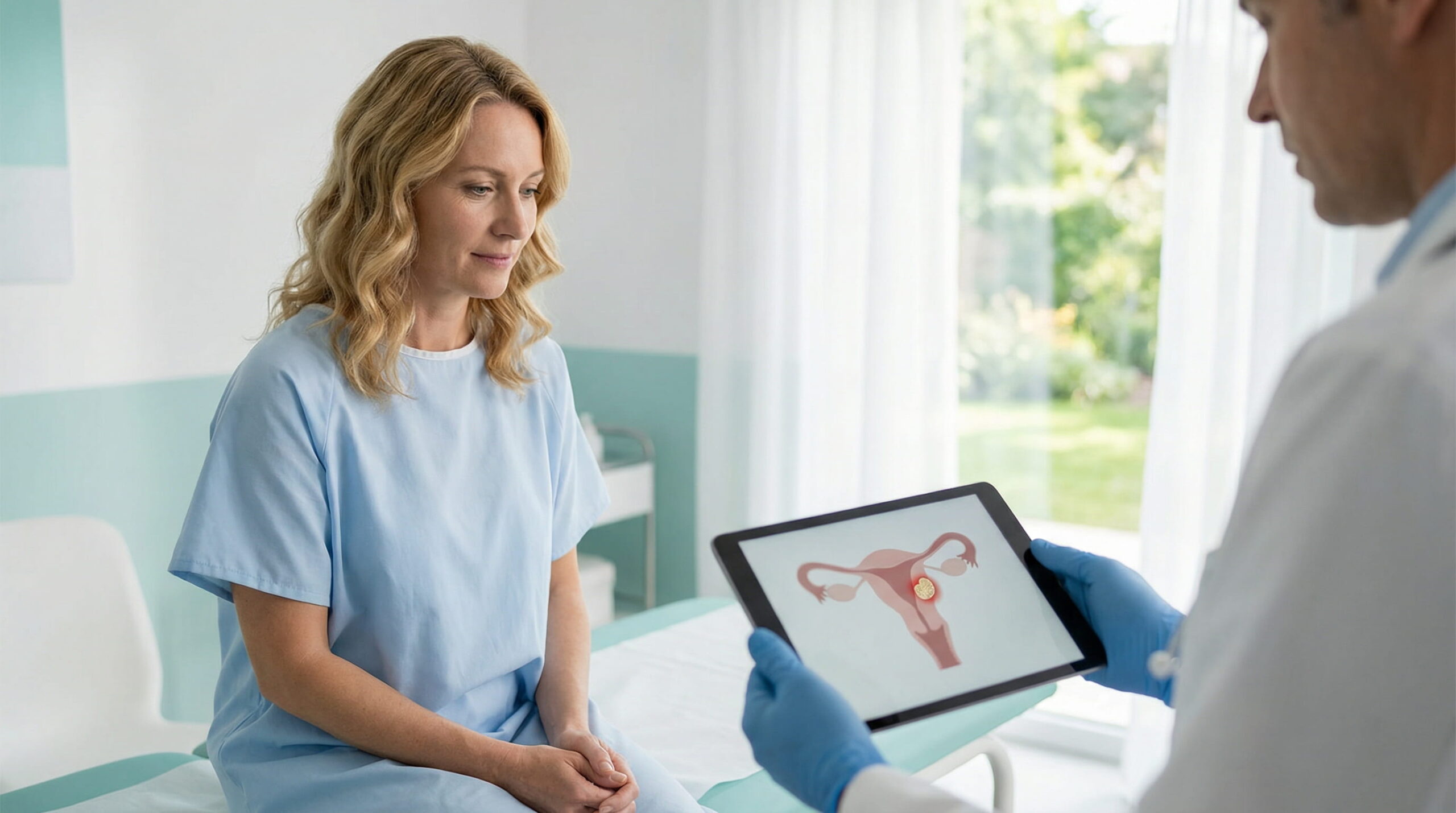
A uterine fibroid (leiomyoma) is a benign growth that develops from the uterine muscle. It can be single or multiple and may grow in different parts of the uterus. Location directly influences symptoms and treatment choice.
- A submucosal fibroid (toward the inside, near the uterine cavity) can cause heavy bleeding and affect fertility even when relatively small.
- An intramural fibroid (within the uterine wall) may contribute to pain, pressure, and heavy bleeding.
- A subserosal fibroid (toward the outside) can cause compression symptoms affecting the bladder or bowel.
That’s why it’s not enough to discuss only “how many centimeters it is.” What matters is where it is, how it relates to the uterine cavity, and how it impacts symptoms and the reproductive plan.
Symptoms: when they’re “manageable” and when to seek prompt evaluation
Some patients discover a fibroid incidentally during a routine check-up. In other cases, symptoms are what bring them to the doctor. Common symptoms include:
- heavy or prolonged menstrual bleeding
- pelvic pain
- a sensation of pressure
- frequent urination
- constipation
Evaluation becomes even more important when complications appear, such as anemia (fatigue, palpitations, reduced exercise tolerance) or when symptoms progressively worsen. In fertility contexts, fibroids matter especially if they distort the uterine cavity or are associated with miscarriage or implantation difficulties.
Accurate diagnosis before choosing treatment

A good plan starts with a complete diagnosis. In most cases, a gynecological consultation and transvaginal ultrasound provide the essential information. In selected situations, additional investigations may be recommended to determine exact location, relationship to the uterine cavity, and the most appropriate therapeutic strategy.
Before a procedure, doctors focus on several key elements:
- the number of fibroids and their distribution
- the size of each fibroid, but especially the relationship to the uterine cavity
- indirect signs that may explain bleeding (for example, associated endometrial changes)
- overall clinical context (age, pregnancy plans, comorbidities, anemia tolerance)
In some cases, pelvic MRI is useful for precise mapping, and sonohysterography or diagnostic hysteroscopy can clarify whether—and how much—a fibroid affects the uterine cavity.
“You deserve to be heard, seen, treated with respect, and supported throughout your life.”

Andreas Vythoulkas
Specialist in Obstetrics and Gynecology


Uterine fibroid treatment: realistic, personalized decision-making
There is no single “standard” treatment that fits everyone. The decision balances symptom severity, procedural risks, and your goals (including fertility).
Broadly, there are three directions:
- monitoring
- symptom control with medication/therapies
- interventions (minimally invasive or surgical) for fibroid removal
Monitoring: when it’s the right option
If a fibroid is small, doesn’t cause significant symptoms, and doesn’t affect the uterine cavity, surveillance may be recommended. This doesn’t mean “ignoring it”—it means periodic follow-ups to check size stability, symptoms, and any changes that would alter the plan.
Medication: its real role
Medication can help control bleeding and pain and may be indicated in certain contexts (for example, correcting anemia before a procedure). It’s important to understand that medication typically controls symptoms but does not “remove” the fibroid as a structural lesion. Its usefulness depends on the goal:
- reducing bleeding
- improving pain
- preparing for an intervention
- temporary management
When uterine fibroid removal is recommended
Fibroid removal is indicated when there is a clear link between the fibroid and symptoms/complications, or when fertility impact is clinically significant. Most often, indications include:
- heavy bleeding with anemia
- persistent pain
- significant pressure symptoms
- uterine cavity involvement in patients planning pregnancy
There are also scenarios where additional investigations and prompt re-evaluation are appropriate:
- seemingly accelerated growth
- atypical symptoms
- mismatch between symptoms and ultrasound findings
Uterine fibroid removal: options and how they’re chosen
The technique depends on location (especially the relationship to the uterine cavity), size, number, and the goal of uterine preservation. Minimally invasive approaches are preferred when they are safe and effective—but correct indication remains the priority.

Myomectomy (uterus preserved)
Myomectomy removes the fibroid while preserving the uterus. It is often recommended for patients who want pregnancy or want to keep the uterus, when the fibroid is clinically relevant.
There are three main approaches:
- Hysteroscopic myomectomy (through the cervix, no abdominal incisions), especially for submucosal fibroids
- Laparoscopic myomectomy (small incisions), when the fibroid is suitable for minimally invasive surgery
- Open (abdominal) myomectomy when size, number, or anatomical complexity requires an open approach for safety and best outcomes
The decision also includes discussion about recurrence risk, how the uterus heals, and recommendations for a future pregnancy.
Hysterectomy (uterus removal) — in selected cases
Hysterectomy may be indicated when symptoms are severe, recurrences are multiple, and other options are not appropriate or have not been effective—especially for patients who are not pursuing pregnancy. This is a decision made after careful evaluation and full counseling, including alternatives and implications.
Minimally invasive procedures: role and limitations
For certain patients, minimally invasive procedures (for example, uterine artery embolization) can be an alternative for symptom control. Eligibility depends on fibroid characteristics and reproductive plans, and recommendations are individualized after weighing benefits and limitations.
It’s also important to assess other potential contributors to pelvic pain or bleeding. For example, in some cases symptoms may also be influenced by endometriosis, and the right approach includes discussing the specific context of Endometriosis Treatment when there is clinical suspicion.
Preoperative preparation: what the medical team aims to achieve

Before fibroid removal, the goal is to optimize safety and reduce risk. In practice, this includes overall evaluation, labs, possible correction of anemia, and a clear perioperative plan regarding medication and conduct.
This is also when realistic expectations are clarified:
- which symptoms should improve
- expected timeframe
- follow-up needs
- warning signs that require prompt medical contact after the procedure
Reproductive goals are clarified here as well, because they can change the technique selection. If pregnancy is planned soon or there is a history of infertility, the strategy is discussed in an integrated manner, including assisted reproduction options when needed, such as In Vitro Fertilization (IVF).
Recovery: what to expect and what is monitored
Recovery varies based on the procedure and individual factors. Generally, after minimally invasive approaches, return to light activity is faster, but recommendations remain personalized.
In the first days, you may experience:
- manageable pain (controlled with analgesics)
- fatigue
- pelvic discomfort
- mild bleeding or spotting (depending on procedure type)
Over the following weeks, the goal is uncomplicated healing and gradual return to usual activities.
Returning to exercise, work, and sexual activity is set based on recovery and your doctor’s guidance. Avoid comparing your recovery to someone else’s—procedure type, fibroid size, and location can change the course significantly.
For trying to conceive after myomectomy, timing is individualized based on uterine healing and reproductive goals. If assisted reproduction is recommended, careful planning within a multidisciplinary team can shorten time to pregnancy and reduce risk.
Risks and complications: what it’s realistic to know in advance
Every intervention has risks, and the purpose of preoperative counseling is to understand them clearly in your context.
General risks include:
- bleeding
- infection
- anesthesia-related reactions
Procedure-specific risks depend on fibroid location, size, number, and technique.
After myomectomy:
- there may be a risk of adhesions
- there is a risk of recurrence (new fibroids may develop over time)
For patients planning pregnancy, your doctor will also discuss how uterine healing influences future recommendations.
For patients seeking broader context about fertility management or associated conditions, educational resources such as endometriosis treatment and IVF options may be relevant when your doctor considers them appropriate in your personalized plan.
Frequently Asked Questions
Can uterine fibroids be treated without surgery?
Yes. If the fibroid does not cause significant symptoms and does not affect the uterine cavity, monitoring may be sufficient. In other situations, treatment to control bleeding or pain can be recommended depending on the clinical evaluation.
When does fibroid removal become necessary?
Most commonly when there is heavy bleeding associated with anemia, persistent pain, significant pressure on nearby organs, or when the fibroid affects fertility, especially if it distorts the uterine cavity. The indication is based on investigations and your reproductive goals.
Is myomectomy recommended if I want to get pregnant?
In many cases, yes, because it preserves the uterus. It is particularly indicated when the fibroid is considered relevant for infertility or alters the uterine cavity. The final recommendation depends on location, size, and overall medical context.
How long does recovery take?
It depends on the type of procedure and the postoperative course. After minimally invasive approaches, recovery is usually faster, but your doctor will provide a realistic timeline and a structured return-to-activity plan.
Can fibroids come back after removal?
Yes. Recurrence is possible, especially after myomectomy, since new fibroids may develop over time. The risk varies by case, and periodic follow-up helps monitor and manage changes early.
Is embolization an alternative to surgery?
In selected cases, yes, particularly for symptom control. It is not suitable for everyone, and the recommendation depends on reproductive plans and fibroid characteristics.
Does a uterine fibroid mean cancer?
In the vast majority of cases, no. Fibroids are benign. If there are elements that require clarification, your doctor may recommend additional investigations to establish a precise diagnosis.
When should you seek urgent medical evaluation?
Prompt evaluation is recommended if you experience very heavy bleeding, dizziness or fainting, sudden severe pain, fever, or signs suggestive of significant anemia. Any intense or worsening symptom should be discussed without delay.

Why choose Genesis Athens for uterine fibroid removal
At Genesis Athens, each case is approached through complete evaluation and individualized decision-making. Recommendations are not based on “one preferred technique,” but on what is safe and effective for your situation: location, size, number of fibroids, symptoms, and reproductive goals.
The plan aims for outcomes that matter: reduced bleeding, pain control, anemia correction, improved quality of life—and, when relevant, a coherent fertility strategy. If you have a uterine fibroid diagnosis and want a clear medical recommendation aligned with your goals, a specialist consultation is the right next step.
If you have been diagnosed with a uterine fibroid and would like a clear, medical recommendation tailored to your personal goals, a specialist consultation is the appropriate step to establish the optimal management plan.
Speak with a specialist about
uterine fibroid removal
Sources:
Uterine Fibroid Removal
Specialist in Obstetrics and Gynecology
Similar Articles

Ectopic Pregnancy Symptoms in the First Month: When Medical Evaluation Is Necessary
Specialist in Obstetrics and Gynecology

The First Period After an Unsuccessful IVF Cycle: When It Happens and What to Expect
Specialist in Obstetrics and Gynecology

Unexplained Infertility: What Investigations May Follow When Tests Appear Normal
Specialist in Obstetrics and Gynecology