

Within Egg, sperm, embryo and ovarian tissue cryopreservation, embryo freezing represents one of the most important modern options for treatment planning. Instead of performing embryo transfer immediately after stimulation and egg retrieval, it is sometimes preferable to preserve the embryos for a later moment, when the body is better prepared. In everyday language, we speak about frozen embryos, while in medical language the term is cryopreservation, most often through vitrification.
The “freeze-all” strategy means, in short, that all viable embryos obtained in one In Vitro Fertilization (IVF) cycle are frozen, while the transfer is scheduled in a later cycle, through FET or frozen embryo transfer. This choice is not universally “better” or “worse”. It is a strategic decision based on safety, implantation chances and the medical context of each couple.
What “frozen embryos” means and how they differ from “fresh embryos”
Frozen embryos are embryos obtained in the laboratory after fertilization, which have been preserved at very low temperatures so they can be used in a later transfer. The main difference from “fresh embryos” is not their origin, but the timing of transfer: with fresh embryos, the transfer takes place in the same cycle as stimulation, while with frozen embryos, the transfer is postponed.
In practice, the frozen embryo strategy allows better synchronization between embryo quality and endometrial receptivity, without the time pressure of the immediate post-stimulation period.
Freezing vs vitrification: using the terms correctly
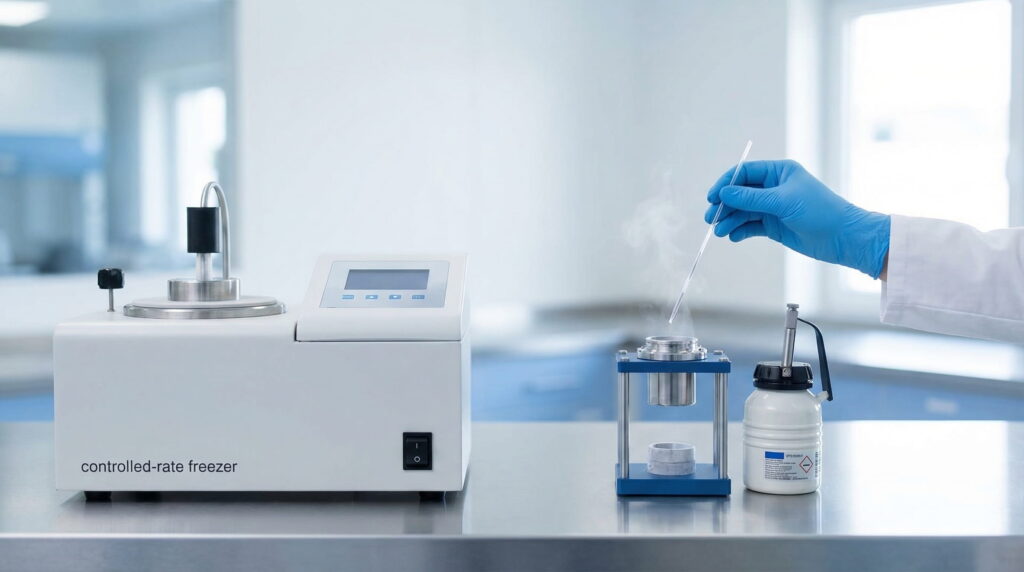
In everyday language, people usually say “freezing”, but the technique used in most modern laboratories is vitrification, a rapid-cooling method that reduces the risk of ice crystal formation. For patients, the practical difference is that vitrification aims to preserve embryo integrity after thawing, which is essential for a frozen embryo transfer with good chances.
What happens in the laboratory: culture days and selection
Embryos may be evaluated and cryopreserved at different stages of development, for example on day 3 or at the blastocyst stage. The choice depends on how they develop, how many are obtained and the overall medical strategy. What matters is that, before vitrification, embryos are assessed, and their preservation is linked to a strict laboratory protocol.
What the “freeze-all” strategy is and why it may be recommended
The freeze-all strategy involves freezing all viable embryos from that cycle, with transfer planned later. Freeze-all is considered mainly when fresh transfer could reduce implantation chances or increase risks for the patient.
In many situations, freeze-all is not a trend but a way to control variables: embryos are obtained, preserved safely and then the endometrium is prepared in a more stable context.

Common situations in which freeze-all may be a good option
1) Increased risk of ovarian hyperstimulation syndrome (OHSS)
In the case of a very strong ovarian response, the body may be more vulnerable immediately after egg retrieval. In such situations, postponing transfer and using frozen embryos later may be part of a safety strategy.
2) An “unsuitable” endometrium during the stimulation cycle
Sometimes, during stimulation, the optimal window of endometrial receptivity may be affected by hormonal variations, including timing that does not align ideally with embryo development. In these cases, preserving embryos for a later cycle may allow a more predictable preparation.
3) The need for investigations or interventions before transfer
If there are suspicions or diagnoses that should be addressed before transfer, for example certain uterine issues, freeze-all provides time for optimization without “losing” the embryos obtained.
4) Staged treatment planning
Sometimes, couples prefer to complete the laboratory stage and schedule transfer later for logistical or medical reasons, without compromising quality. In such contexts, vitrified embryos offer flexibility.
When freeze-all is not necessarily the first option
There are situations in which fresh transfer may be reasonable, especially if the response to stimulation is balanced, risks are low and the endometrium appears well prepared. Even then, the decision is made according to the full clinical picture.
Freeze-all may mean additional time, costs associated with storage and a more emotionally difficult waiting period for some couples. At the same time, for others, the fact that transfer is not rushed brings greater clarity and psychological comfort.
What follows after freezing: the steps until frozen embryo transfer (FET)
After vitrification, the next stage is planning frozen embryo transfer in a later cycle. In practice, this stage is one of the most important, because it aims to create optimal conditions for implantation.
Step 1: results after egg retrieval and the laboratory plan
After egg retrieval and fertilization, embryo development in culture is monitored. The number of viable embryos, their stage and the cryopreservation plan are discussed. At this stage, the full context of the cycle matters, and for a broader picture of all stages, a complete guide on In Vitro Fertilization (IVF) may be useful, because it places all decisions within one cycle in the right order.
Step 2: when FET is performed
The timing of transfer depends on the clinical condition after stimulation, possible risks, investigations and the way endometrial preparation is chosen. For some patients, FET may be scheduled relatively soon. For others, a pause is preferred.
Step 3: preparing the endometrium for FET, protocol options
There are several ways to prepare the endometrium. The choice is medical and depends on ovulation, cycle regularity, patient history and clinical preferences.
- Natural cycle, with monitoring and careful timing
- Hormone replacement cycle, with hormonal therapy to control the implantation window more precisely
- Mildly stimulated cycle, in selected situations
In this article, a general understanding is useful, but the final decision is individualized. What matters is that transfer with frozen embryos does not mean simply “thaw and transfer”, but a preparation stage that can make a real difference.
Step 4: the day of transfer
Transfer is generally a short and delicate procedure. On the day of transfer, the embryo is thawed and evaluated, then transferred into the uterus. Recommendations for the following days are usually simple and focused on balance: avoiding excess and following the support treatment where indicated.
Step 5: after transfer and the pregnancy test
After FET, the plan established by the medical team is followed. Testing is performed at the recommended time in order to avoid confusing interpretations. During this period, the most useful thing is clear communication and a written plan, so that each step remains predictable.
Frozen embryos and success rates: what influences the results
In discussions about frozen embryos, the question “Are the chances lower?” appears frequently. In practice, results depend on the same factors that matter in fresh transfer as well: age at the time the eggs were obtained, embryo quality, laboratory quality, endometrial receptivity and medical history.
For some patients, frozen embryo transfer may be advantageous precisely because it is performed in a calmer cycle, without the intense hormonal variations associated with stimulation. In others, the difference may be small, and the strategy is decided strictly on medical grounds.
In certain contexts, the discussion about cryopreservation is also linked to fertility preservation, including Egg cryopreservation: what it is, how it is done and when it is recommended, especially when the timing of gamete retrieval becomes a critical element in planning.
“You deserve to be heard, seen, treated with respect, and supported throughout your life.”

Andreas Vythoulkas
Specialist in Obstetrics and Gynecology


Safety, timing and practical decisions
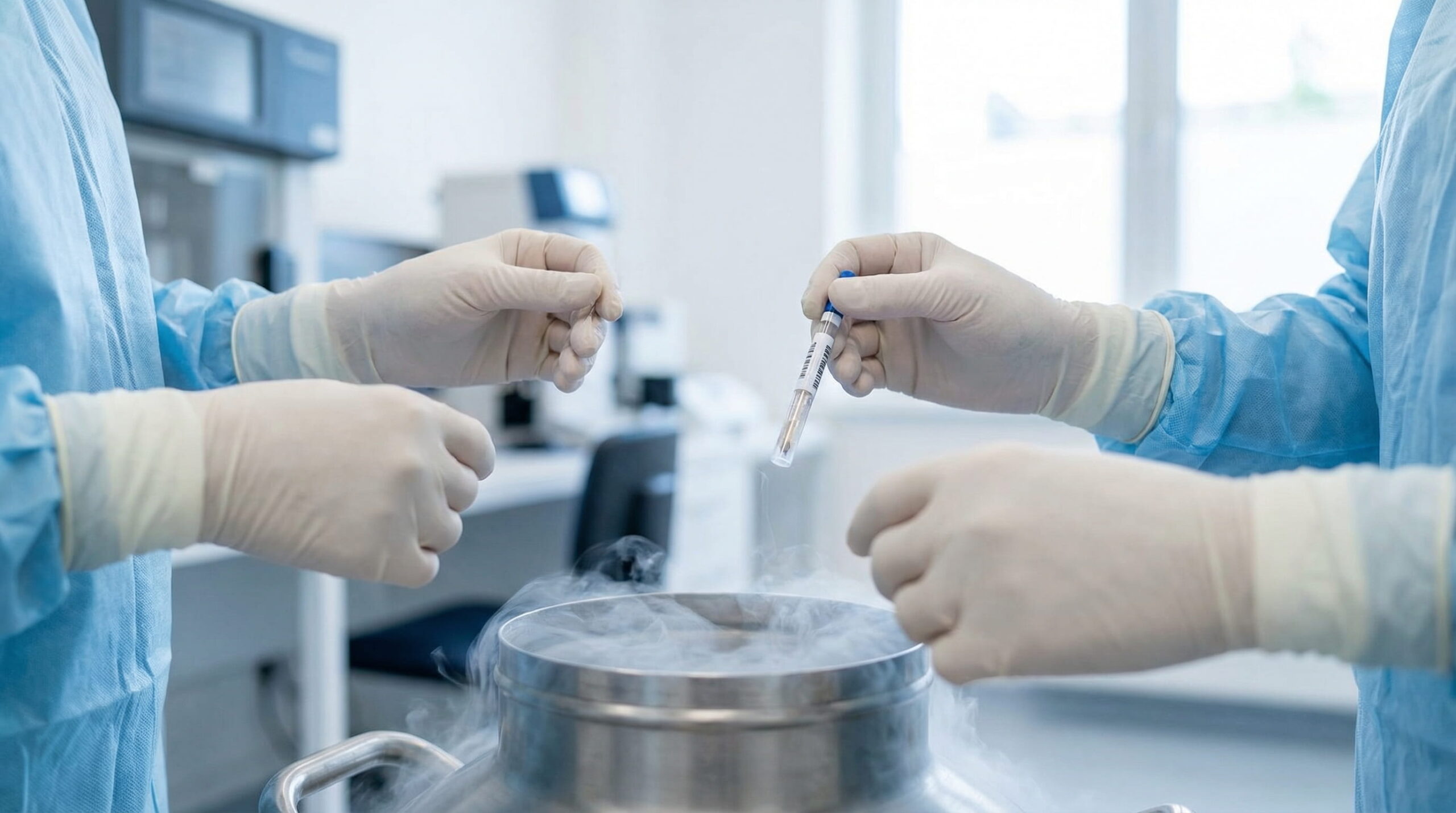
Frozen embryos are stored under controlled conditions, with traceability and strict laboratory protocols. The duration of storage may depend on the legal and contractual framework, and these details are clarified before cryopreservation.
In practice, freeze-all may be a decision related to safety, for example in high-risk contexts, to efficiency, meaning optimization of transfer timing, or to planning, meaning clearly separated stages. Sometimes, the discussion also intersects with options such as embryo donation, where the reproductive journey may require medical alternatives that are well understood.
In some situations, fertility preservation also becomes relevant for medical reasons unrelated to infertility itself, as happens in Oncofertility preservation, where timing and strategy may weigh decisively.
Costs and access: why planning matters
Freeze-all usually involves costs associated with vitrification and storage, followed by costs for the transfer cycle, including monitoring, medication and the procedure itself. For some couples, access to treatment is also influenced by the funding framework, and in Romania there is strong interest in National IVF Program 2025 – complete guide, especially when staged planning, including FET, becomes part of the discussion.
Frequently Asked Questions
What exactly does “frozen embryo transfer” (FET) mean?
FET is the transfer of a cryopreserved embryo in a cycle following the stimulation cycle. The embryo is thawed on the day of transfer, assessed and then transferred into the uterus, after the endometrium has been prepared through a medically established protocol.
Do frozen embryos have lower chances than fresh embryos?
There is no universal answer. In many situations, the chances may be comparable, and sometimes FET may even be preferred because it is performed in a more stable context, without the direct effect of stimulation on the endometrium. The major factors remain age at the time of egg retrieval, embryo quality and endometrial conditions.
How long can frozen embryos be stored?
They can be stored long term under controlled conditions. The exact duration depends on the applicable legal framework and the storage contract. These aspects are clarified before cryopreservation begins.
Why is the “freeze-all” strategy sometimes recommended?
Mainly for safety and for optimizing implantation chances. It may be recommended when there is an increased risk of hyperstimulation, when the endometrium does not appear optimal during the stimulation cycle or when time is needed for treatments or investigations before transfer.
How is the endometrium prepared for frozen embryo transfer?
Preparation can be done in a natural cycle, with careful ovulation monitoring, or in a hormone replacement cycle, with hormonal therapy to control timing. The choice depends on cycle regularity, medical history and the plan recommended by the physician.
Is frozen embryo transfer a painful procedure?
Generally, transfer is a short and well-tolerated procedure. If discomfort occurs, it is usually minimal. What matters is that the procedure is performed under optimal conditions and with a clear protocol.
What does “survival after thawing” mean and why does it matter?
It refers to the embryo’s ability to maintain its integrity after the thawing process. Survival depends on embryo quality and laboratory standards, including the vitrification protocol. That is why laboratory quality is an essential element in the discussion about frozen embryos.
When is the pregnancy test done after FET?
The test is performed at the time recommended by the medical team so that the result can be interpreted correctly. Testing too early may create confusion and unnecessary stress, especially in the context of supportive treatment.

Why choose Genesis Athens for frozen embryos
In a treatment journey that includes frozen embryos and later transfer, details make the difference: from laboratory quality to the coherence of the medical plan and the communication between the team and the patients. At Genesis Athens, cryopreservation is seen as an integrated part of the strategy, not as a stage that is “separate” from the rest of the treatment.
The clinical approach aims for predictable and safe medical decisions, with attention to the complete context of each case. For situations in which fertility preservation becomes urgent or a priority, there are also dedicated pathways, including Fertility preservation for oncology patients (oncofertility), where timing and coordination are essential.
Clinical experience shows that patients especially value clarity: a coherent explanation for “why freeze-all”, a concrete plan for “what comes next” and real continuity between the laboratory and the transfer protocol. In the same direction, for those who wish to explore the medical perspective and the patient journey in IVF more deeply, there are complementary resources such as In Vitro Fertilization (IVF) – patient experience, which can help set realistic expectations regarding both the stages and the emotional side of treatment.
Ultimately, embryo freezing and the freeze-all strategy are not goals in themselves, but modern tools that can support one simple thing: choosing the right moment for transfer under the most favorable possible conditions. For a complete understanding of the treatment approach, including in the cryopreservation area, additional explanations about Egg, sperm, embryo and ovarian tissue cryopreservation and about Egg cryopreservation: why timing matters may also be useful, especially when medium-term planning becomes part of the medical strategy.
Talk to a specialist about
Embryo Freezing
Sources:
- ASRM – Best practices pentru vitrificarea ovocitelor și embrionilor (Committee Opinion)
- ESHRE – Guideline: Ovarian Stimulation în IVF/ICSI (include prevenția OHSS)
- HFEA (UK) – Embryo freezing (informații pentru pacienți)
- NICE (UK) – IVF: recomandări și context clinic (include utilizarea embrionilor congelați)
- CDC (US) – About ART (include crioprezervarea ovocitelor și embrionilor)
Embryo Freezing in IVF: When the “Freeze-All” Strategy Is Recommended and What Comes Next
Specialist in Obstetrics and Gynecology
Similar Articles

In Vitro Fertilization With Donor Eggs: When It Is Recommended and What It Involves
Specialist in Obstetrics and Gynecology

What Happens After a Negative IVF Result
Specialist in Obstetrics and Gynecology

How Embryo Donation Works
Specialist in Obstetrics and Gynecology