

Egg donation is an assisted reproduction solution offered to women who cannot conceive with their own eggs. This happens because the quality of the eggs is poor, or there are no eggs left.
Egg donation has both medical and human importance. In Romania, egg donation is legal.
Donation is a voluntary and anonymous medical act, regulated by European directives.
Genesis Athens Clinic is a Centre of Excellence in Infertility Treatment. It is authorised and has international experience in egg donation programmes.
What Is Egg Donation
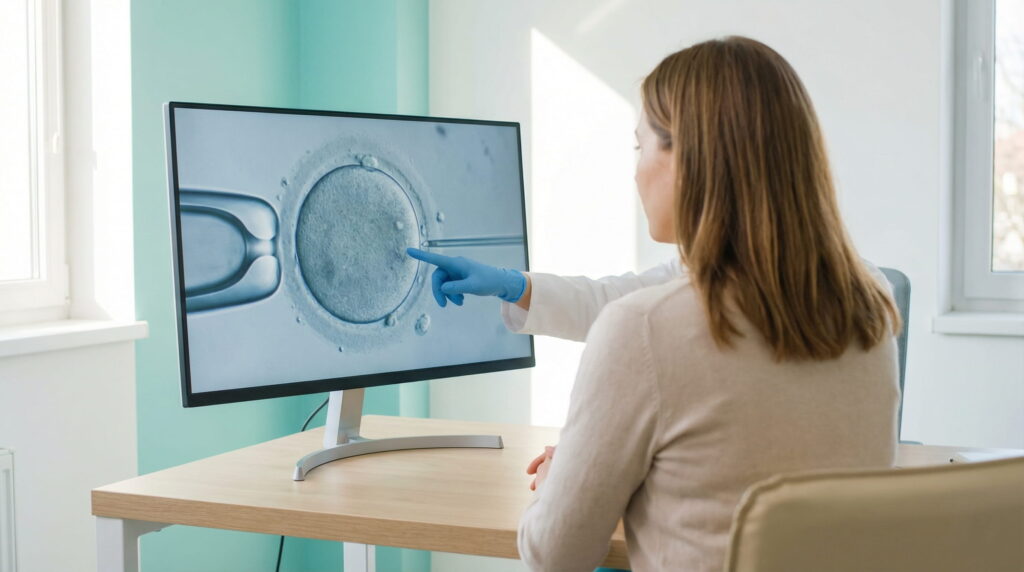
Egg donation means collecting eggs from a young, healthy donor and using them in IVF treatments for another patient.
Donation is a voluntary and anonymous medical act, regulated by European directives.
The doctor will collect the eggs from the donor. Then they are prepared by the embryologists. The donated eggs will be fertilised with the sperm of the beneficiary’s partner (the future father).
When Egg Donation Is Recommended
Egg donation is recommended:
- If you no longer have eggs in your ovaries (menopause).
- If the eggs remaining in the ovaries are no longer viable, it means the ovarian reserve is low. A woman’s age affects both the quality and quantity of eggs.
In these situations, the only solution for achieving pregnancy is in vitro fertilization (IVF) with donated eggs.
Egg donation is indicated for:
- Women with low ovarian reserve or premature menopause
- Genetic conditions that do not allow the use of their own eggs
- Repeated IVF failures
- Patients who have undergone ovarian surgery
- Women who have received oncological treatments
Why Oncological Treatments Destroy Eggs
Chemotherapy
Chemotherapy reduces the number of eggs (the ovarian reserve), which makes it difficult for the mother to become pregnant naturally. Chemotherapy is designed to target rapidly dividing cells, a characteristic of many cancer cells. Eggs, like other reproductive cells (sperm), divide rapidly during their development and are therefore vulnerable to the effects of chemotherapy.
Chemotherapy drugs can damage the DNA of eggs, which prevents normal cell division and leads to cell death. Chemotherapy can cause partial or complete destruction of eggs and therefore impairs ovarian function, including fertility.
Radiotherapy
At the same time, radiotherapy reduces the number of healthy eggs in the ovaries. Radiotherapy applied to or near the abdomen, pelvis, or spine damages the nearby reproductive organs.
Radiotherapy is a cancer treatment method that uses high-energy radiation, such as X-rays, gamma rays, electrons, or protons, to destroy cancer cells and prevent them from multiplying. It can be used as a main treatment on its own, or in combination with other therapies (chemotherapy, surgery).
Radiotherapy acts by directly destroying the DNA of cancer cells or by forming reactive chemical compounds that damage their structure. It also destroys the DNA of eggs.
For this reason, before starting cancer treatments, it is recommended to cryopreserve your own eggs, which can be used later, when you are healthy again.
If you did not cryopreserve eggs before oncological treatments, you can use donated eggs for an in vitro fertilization (IVF) procedure.
Eligibility Criteria for Egg Donors
Who donates eggs?
Young women (20–34 years old) donate eggs voluntarily and without financial benefit for the act of egg donation. A young woman who wants to donate eggs goes to an accredited clinic for egg donation. In order for the process to be ethical, she does not receive payment for donation, but her travel, accommodation, procedure costs, hormonal stimulation, and medical tests are covered.
In Romania, eggs cannot be donated for payment. The act of donation falls under transplant legislation, and paid donation is easily associated with possible organ trafficking.
How Egg Donation Is Performed
Evaluation of the Donor
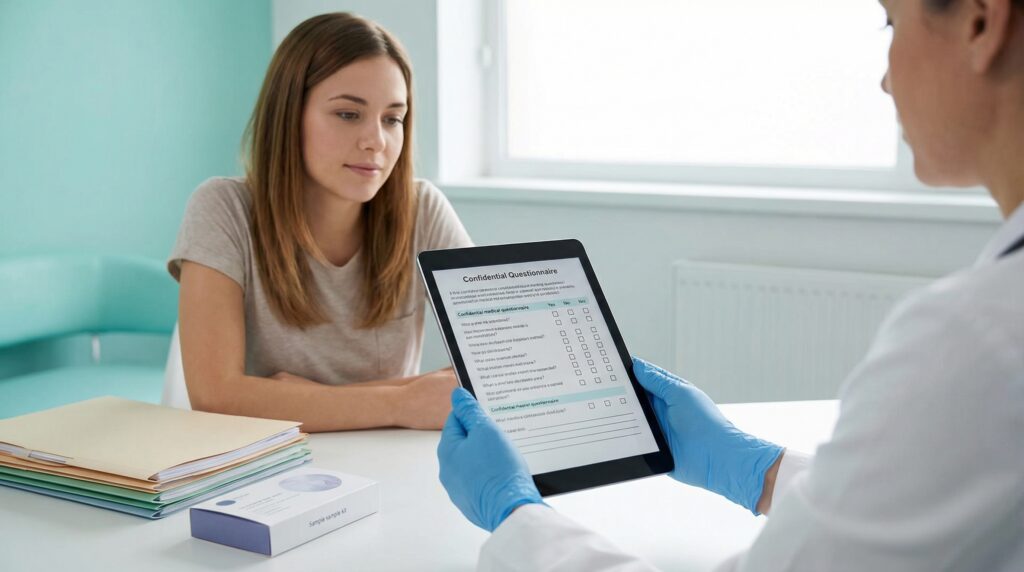
The donor will undergo medical tests and genetic screening.
Genetic screening:
- Identification of hereditary diseases: the possibility that the donor could transmit certain genetic diseases to the embryo is investigated.
- Testing for common genetic conditions: tests usually target conditions such as cystic fibrosis or spinal muscular atrophy, which are inherited.
Other tests in the evaluation process:
- Blood tests: general health is assessed, blood group and Rh factor are determined, and the donor is tested for infectious diseases (HIV, hepatitis, syphilis).
- Ultrasound: the condition of the uterus and ovaries is evaluated.
- Urine tests: used to detect the use of prohibited substances and sexually transmitted infections (gonorrhoea, chlamydia).
Psychological screening: some clinics also perform a psychological evaluation in order to build a complete profile of the donor.
After this, the donor’s ovarian stimulation treatment begins.
Ovarian Stimulation and Monitoring
Ovarian stimulation treatment (donor):
We stimulate the ovaries through specific medication so that they mature all the eggs that can be matured in a given month. Normally, the body is able to mature only one egg per month. The rest of the eggs that begin to mature in that month are lost.
Through ovarian stimulation, we do not lose these eggs. The egg is protected by the follicle, a small fluid-filled sac. The follicle is visible on ultrasound. Monitoring the number and growth of follicles during treatment is done through transvaginal ultrasound and hormonal blood tests. These analyses allow the precise determination of the optimal moment for egg collection.
Egg Collection
Egg collection is performed by puncture, under ultrasound guidance, with sedation. The procedure lasts only a few minutes.
Fertilization and Transfer to the Recipient
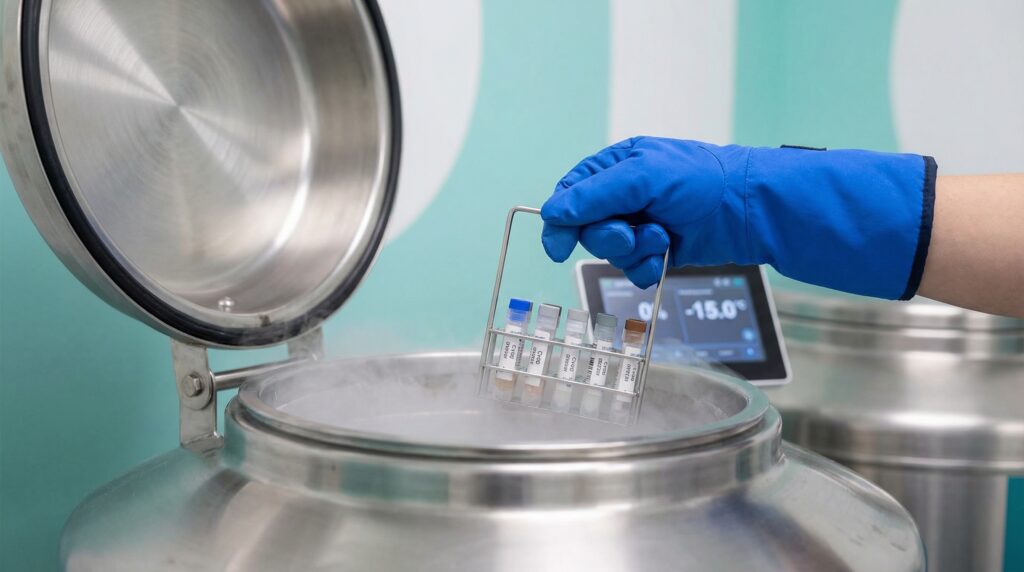
After collection, the eggs can follow two paths: either immediate in vitro fertilization with the sperm of the future father (the male partner), or freezing by a technique called vitrification, which allows long-term storage without affecting their viability.
Frozen eggs can be fertilised later, when the recipient is ready for embryo transfer.
Process for the Recipient
The recipient is the future mother and the patient who receives the donated eggs.
Synchronising donor and recipient:
The donor’s menstrual cycle must be synchronised with that of the recipient. When the eggs need to be collected, the patient is called to the clinic and undergoes ovarian puncture under anaesthesia. Egg retrieval is guided by ultrasound and is a short procedure.
Special preparation is also required for the woman who will receive the eggs.
Preparing the Recipient’s Endometrium for Embryo Transfer
The recipient will undergo special preparation of the endometrium so that the pregnancy has the best chance to implant in the uterus.
Embryo transfer:
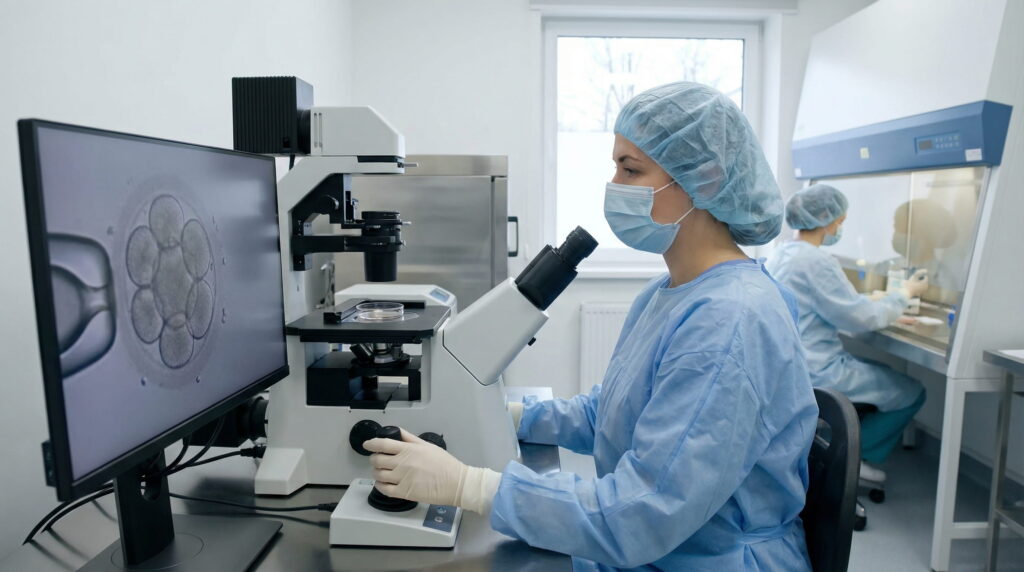
As a result of IVF, embryos are formed and cultured in the laboratory. Embryo transfer is performed on day 5 of development (blastocyst stage) so that implantation chances are maximised
Pregnancy test:
The recipient will have a pregnancy test three weeks after embryo transfer to confirm or rule out pregnancy. This consists of blood tests, accompanied by an ultrasound scan.
The pregnancy will then be monitored in the same way as any other pregnancy.
Complete Preparation for the Recipient (the Woman Who Will Carry the Pregnancy)
The recipient (the woman who will carry the pregnancy) will undergo:
- Assessment of overall health and of the uterus
- Blood tests and hormonal tests
- Ultrasound to check the condition of the endometrium (the lining inside the uterus where the embryo will implant)
- Medical treatment to synchronise her cycle with that of the donor
IVF with Donated Eggs for the Recipient
After egg collection from the donor, the recipient can achieve pregnancy only through in vitro fertilization (IVF). Fertilization is carried out using eggs obtained from a young, healthy female donor.
Once the eggs are collected from the donor, they are fertilised with the sperm of the recipient’s partner (the woman who will carry the pregnancy).
The embryos obtained from the donated eggs and the partner’s sperm are transferred into the uterine cavity of the recipient.
Which Method Is More Effective: IVF with Fresh or Frozen Eggs?
Fresh eggs have a slightly higher success rate, because they are not subjected to the stress of freezing and thawing. However, frozen eggs allow the use of a larger number of donors without the need to synchronise the menstrual cycles of the recipient and the donor.
Psychological Aspect for the Recipient (the Woman Who Will Carry the Pregnancy)
For many women, deciding to take part in an egg donation programme is difficult. It is important, however, to understand and internalise the following:
- The baby develops in your own body
- The baby receives nutrients and oxygen from you
- The baby is protected by your immune system
- Studies show that a strong epigenetic bond is formed between mother and embryo; your genes and environment influence the child’s development
- You will be the one giving birth
- You will be able to breastfeed immediately after birth
Success Rate of IVF with Donated Eggs
If the genetic material (eggs) comes from a young, healthy donor, the success rate of the IVF procedure will be very high.
What are the advantages for the recipient?
- High pregnancy rate – over 60% from the first cycle
- Possibility of becoming a mother even in the absence of ovulation
- Possibility for the male partner to have a biological child
- Emotional fulfilment: carrying, giving birth to, and raising your own child
- Medical safety and controlled procedures. Donors are carefully screened and genetic risks are excluded
Advantages and Outcomes of Egg Donation
Benefits for couples who will receive donated eggs:
- High success rate in IVF with young eggs (> 60%)
- Medical safety and controlled procedures
- Possibility for the male partner to have a biological child
- Fulfilment of the dream of becoming parents
“You deserve to be heard, seen, treated with respect, and supported throughout your life.”

Andreas Vythoulkas
Specialist in Obstetrics and Gynecology


Risks and Ethical Aspects
What risks occur during egg collection for the donor?
The greatest risk of the procedure is so-called ovarian hyperstimulation syndrome (OHSS). Ovarian hyperstimulation syndrome is a condition that appears as an exaggerated response to hormonal medication used in fertility treatments such as IVF. After egg collection, side effects can appear. Bloating and abdominal pain are the most common.
Before egg donation, counselling is very important.
It is an act of enormous medical and human importance.
Genesis Athens follows the European ESHRE protocol and the Romanian Ministry of Health protocol for safe donation.
Chances of Success
The success rate of pregnancy depends on the donor’s age. The younger the donor (20–30 years), the higher the quality of the eggs.
At Genesis Athens, the average pregnancy rate is > 60% per complete cycle.
The success rate also depends on the technology of the embryology laboratory.
Frequently Asked Questions
Who can be an egg donor?
Egg donors must meet several strict criteria and undergo a series of medical tests in order to be eligible to donate. They undergo comprehensive blood tests for infectious diseases (HIV, syphilis, hepatitis), genetic tests, verification of blood group and Rh factor, urine tests to detect sexually transmitted infections, and ultrasound scans.
In addition, the donor undergoes psychological screening so that a complete profile of the donor can be established.
Donors must be between 20 and 33 years of age.
Is donation anonymous in Romania?
Yes, it is anonymous.
How many eggs are usually collected?
In general, between 8–10 eggs are donated in order to obtain at least 2 viable blastocysts that can be transferred into the recipient’s uterus.
What tests are required before donation?
Genetic screening:
- Identification of hereditary diseases: the possibility that the donor could transmit certain inherited genetic diseases to the child is investigated.
- Testing for common genetic conditions: tests usually target conditions such as cystic fibrosis or spinal muscular atrophy, which are inherited.
Other tests in the evaluation process:
- Blood tests: general health is assessed, blood group and Rh factor are determined, and the donor is tested for infectious diseases (HIV, hepatitis, syphilis).
- Ultrasound: the condition of the uterus and ovaries is evaluated.
- Urine tests: used to detect the use of prohibited substances and sexually transmitted infections (gonorrhoea, chlamydia).
Psychological screening:
Psychological evaluation is necessary to establish a complete profile of the donor.
What are the chances of success of the procedure?
Because the eggs are young, the pregnancy rate for the recipient exceeds 60%. The chances of pregnancy after in vitro fertilization with donated eggs are real.
On average, the success rate for this procedure is around 70% for women under 45 years of age and about 60% for women aged 45–50.
Does the donor receive financial compensation?
Donation is a voluntary act in Romania. It is not financially rewarded.
Are there risks for the donor?
The greatest risk of the procedure is so-called ovarian hyperstimulation syndrome (OHSS). Ovarian hyperstimulation syndrome is a condition that appears as an exaggerated response to hormonal medication used in fertility treatments such as IVF. After egg collection, side effects can appear. Bloating and abdominal pain are the most common.
How long does the entire process last?
Less than 30 days.

Why Choose Genesis Athens for Egg Donation
Genesis Athens is authorised for egg donation and IVF programmes.
The modern embryology laboratory uses state-of-the-art technologies.
Our embryologists are ESHRE-certified.
We offer 24/7 medical support.
Our approach is empathetic and safe for both donors and recipients.
Talk to an expert about
Egg Donation

Egg Donation | What It Is, How It Works & When It’s Advised
Specialist in Obstetrics and Gynecology
Similar Articles

Ovarian Pain During Pregnancy: Possible Causes, Associated Symptoms and When to See a Doctor
Specialist in Obstetrics and Gynecology

Optimal Nutrition to Support Fertility
Specialist in Obstetrics and Gynecology

The Fertile Window Explained: Ovulation, the Menstrual Cycle and Conception
Specialist in Obstetrics and Gynecology