

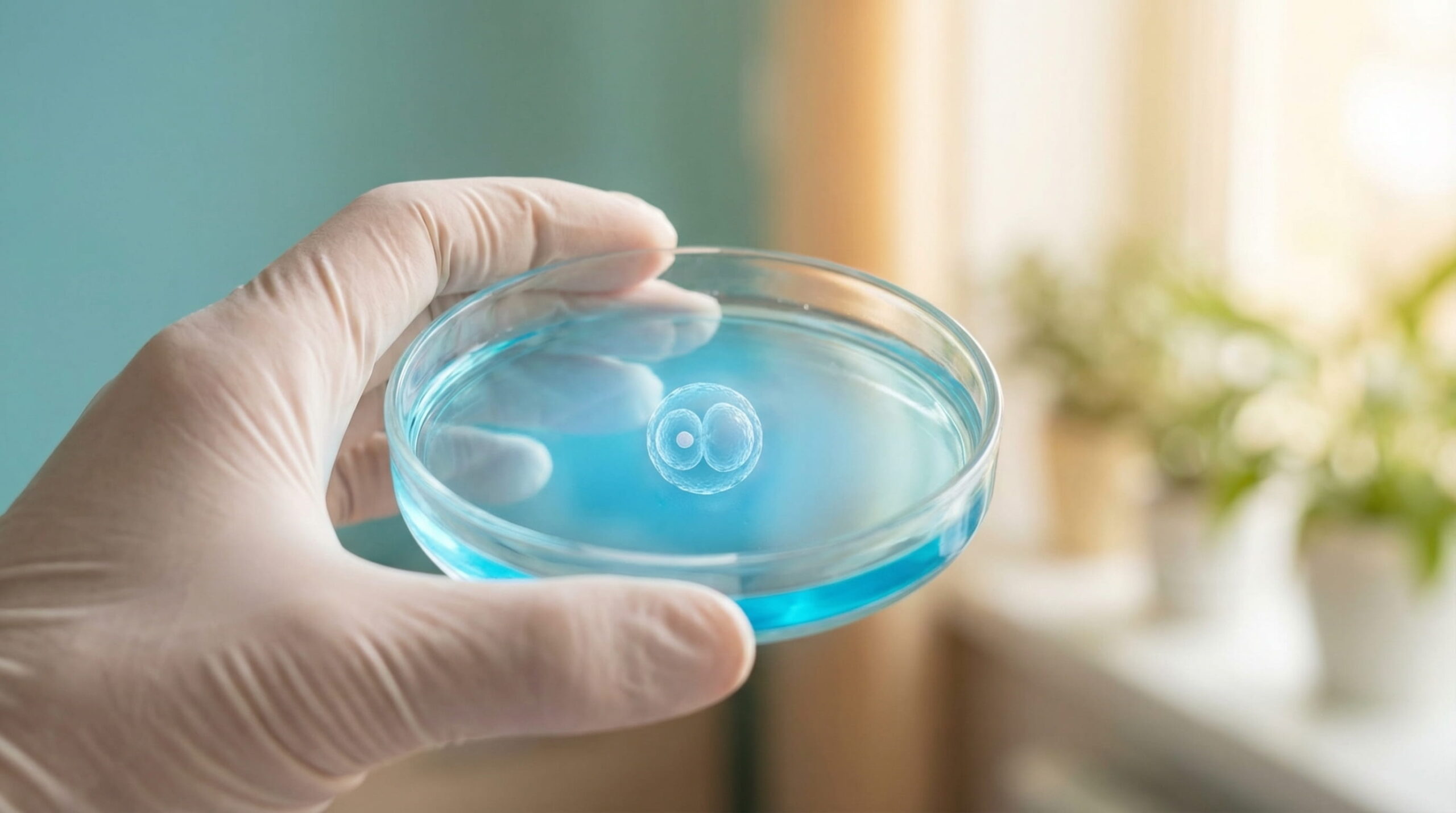
After transfer, many patients look for clear reference points about what follows and how embryo development after embryo transfer can be understood without exaggerated interpretations or unrealistic promises. In the context of an in vitro fertilization (IVF) protocol, this stage is one of the most emotionally sensitive, but also one of the hardest to observe directly, because the real changes take place at a microscopic level.
What Happens Immediately After Embryo Transfer
Embryo transfer is the moment when the embryo is introduced into the uterine cavity, in an environment carefully prepared for implantation. From that point, embryo development after embryo transfer depends on several factors: embryo quality, the stage of development on the day of transfer, endometrial receptivity and the biological characteristics of each body.
It is important to understand that the transfer itself does not mean instant implantation. Even when the procedure takes place under very good conditions, the embryo needs time to continue its natural biological process. In the first hours after transfer, it continues its development and begins interacting with the uterine lining. If the transfer is performed with a blastocyst, meaning an embryo at a more advanced stage, the approach to the moment of implantation may be faster than in the case of an embryo transferred earlier in development.
For patients who want a broader picture of the stages of the procedure, the page about IVF treatment offers the medical context needed to understand the place of embryo transfer within the whole process.
How Implantation Progresses in the First Days
When discussing embryo development after embryo transfer, interest is most often focused on the first days. During this period, the embryo may continue cell division, may hatch from the protective structure called the zona pellucida and begins direct contact with the endometrium. This process is known as implantation and does not occur identically in every case.
In general terms, in embryo development after embryo transfer, it goes through several successive biological stages: continued development, approach to the uterine lining, attachment and later controlled invasion into the endometrium. Only after this process is established can the body begin producing the hormone hCG, which is the basis of the pregnancy test.
For this reason, early signs are often uncertain or absent. Some patients describe mild cramps, a feeling of pelvic tension or slight discomfort, but these manifestations do not by themselves confirm implantation. They may also be influenced by the hormonal treatment given after the procedure. From a medical point of view, proper evaluation is done through testing at the moment recommended by the doctor, not on the basis of isolated symptoms.
In situations where the embryos were previously preserved through freezing, the therapeutic pathway includes an important laboratory and planning component. For this context, it may also be useful to read materials about egg cryopreservation: what it is, how it is done and when it is recommended and about cryopreservation of eggs, sperm, embryos and ovarian tissue, especially when embryo transfer takes place in a later cycle.
Why Development Cannot Be Felt the Same Way from One Person to Another
One of the most frequent sources of anxiety after the procedure is comparison with the experiences of other patients. In reality, embryo development after embryo transfer does not produce a standard clinical picture. Some women notice nothing unusual and still obtain a positive result, while others have symptoms that do not correlate with implantation.
This difference appears because implantation is a microscopic phenomenon, and bodily perception is influenced by many factors: individual sensitivity, progesterone treatment, gynecological history, stress level and even the close attention paid to every sensation during that period. For this reason, the interpretation of symptoms must be done with caution.
Another important aspect is that the absence of signs does not automatically indicate an unfavorable development. Likewise, the presence of mild signs does not guarantee the establishment of pregnancy. What truly matters is monitoring at the right time and following the recommendations received after transfer, including administering the support treatment according to the established plan.
In responsible medical practice, patients are encouraged to view this period realistically: there are well-known biological stages, but they cannot be followed directly at home, day by day. That is why correct information and balanced expectations are essential.
“You deserve to be listened to, seen, treated with respect and supported throughout life.”

Andreas Vythoulkas
Specialist in Obstetrics and Gynecology


Frequently Asked Questions
How quickly does implantation begin after embryo transfer?
The exact timing may vary depending on the stage of the transferred embryo and the characteristics of the endometrium. In general, if a blastocyst is transferred, implantation may begin sooner than in the case of an embryo at an earlier stage.
Does the absence of symptoms mean that the embryo has not implanted?
No. Many patients do not have obvious symptoms, and this does not exclude a favorable development. Implantation may take place without clear manifestations felt subjectively.
Are mild cramps after transfer normal?
Mild discomfort or slight cramps may occur after the procedure, but they do not by themselves represent a reliable indicator of implantation. They must be interpreted cautiously, especially in the context of hormonal treatment.
When can the pregnancy test be taken after embryo transfer?
Testing must be done at the interval recommended by the treating doctor, in order to avoid inconclusive results. A test performed too early may cause confusion and unnecessary stress.

Why Choose Genesis Athens for Embryo Transfer and Monitoring After the Procedure
At Genesis Athens, embryo transfer is integrated into a coherent medical pathway, in which each stage is correlated with the patient’s history, the response to treatment and the relevant clinical data of that specific cycle. The emphasis is placed on medical rigor, careful evaluation and clear communication, so that decisions are made in an informed and balanced way.
The experience of a specialized clinic matters not only on the day of the procedure, but also in the way endometrial preparation, the selection of the optimal timing and post-transfer monitoring are coordinated. For patients, this translates into more clarity, less unnecessary uncertainty and a medical setting that treats an extremely important stage with seriousness.
Genesis Athens follows an institutional, responsible and modern approach in reproductive medicine, with attention both to the technical component of procedures and to the need for correct patient information. In a subject such as embryo development after embryo transfer, this combination of medical precision and balanced communication is essential.
Talk to a specialist about
Embryo Development After Embryo Transfer
Sources:
- Human Fertilisation and Embryology Authority (HFEA) – embryo transfer și ce urmează după procedură
- ESHRE – informații și ghiduri despre reproducerea umană asistată
- American Society for Reproductive Medicine (ASRM) – resurse pentru pacienți despre FIV și embriotransfer
- NHS – informații medicale despre IVF și etapele tratamentului
How the Embryo Develops After Embryo Transfer
Specialist in Obstetrics and Gynecology
Similar Articles

Treatment for Polycystic Ovaries: Options Depending on Symptoms and Reproductive Objective
Specialist in Obstetrics and Gynecology

Intrauterine Insemination: Price, What It Includes and What Can Vary
Specialist in Obstetrics and Gynecology

Recommendations After Embryo Transfer: What It Is Best to Avoid
Specialist in Obstetrics and Gynecology