

An endometrial polyp is a benign growth that develops from the uterine lining, the endometrium. In many situations it causes no symptoms and is discovered incidentally, but sometimes it may be associated with abnormal bleeding and, in the context of infertility, it may raise questions about implantation chances, including before In Vitro Fertilization (IVF).
Below are the key medical criteria that help explain when an endometrial polyp is clinically relevant, how the diagnosis is confirmed and in which situations intervention is recommended.
What an endometrial polyp is and why it appears
An endometrial polyp, often also called a uterine polyp, is a localized proliferation of the endometrium that forms a protruding structure within the uterine cavity. It may be single or multiple, small or larger, broad-based, sessile, or attached by a stalk.

The exact causes are not always identifiable, but there are factors that may favor its development:
- hormonal imbalances, especially estrogen-related ones
- chronic local inflammation
- age, as incidence may increase over time
- certain metabolic conditions
From a clinical perspective, not every endometrial polyp has the same significance. Its relevance depends on symptoms, reproductive context, imaging appearance and individual risk factors.
Symptoms and signs that may suggest the presence of a polyp
An endometrial polyp may be asymptomatic. When symptoms do appear, the most common are related to abnormal uterine bleeding:
- spotting between periods
- heavier or prolonged menstrual bleeding
- bleeding after sexual intercourse
- bleeding after menopause, which requires prompt evaluation
In the context of infertility, suspicion may also arise in the absence of symptoms, for example when investigating delayed conception, pregnancy loss or implantation failure.
Endometrial polyp and fertility
In certain situations, an endometrial polyp may influence fertility through:
- altering the “space” of the uterine cavity, which may interfere with implantation
- local changes in the endometrium, including an inflammatory microenvironment
- association with abnormal bleeding, which may reflect suboptimal endometrial function
However, there is no universal rule. A small endometrial polyp, without symptoms and discovered incidentally, does not automatically have the same impact as a larger, multiple polyp or one located in a strategic area of the uterine cavity. In practice, the decision is based on the overall clinical and imaging picture, as well as on the reproductive plan.
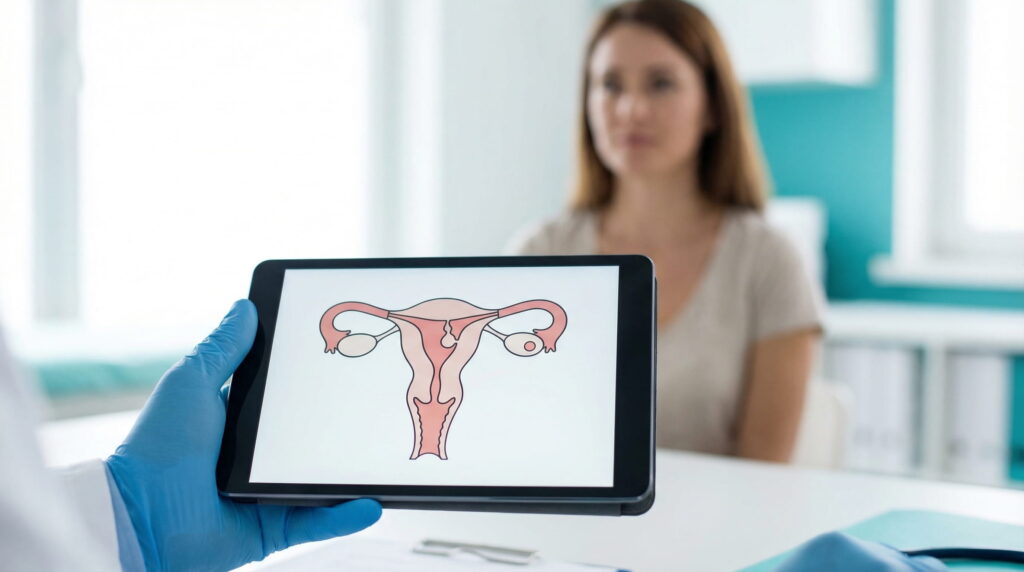
The impact of an endometrial polyp on implantation, including in IVF
In the context of implantation, the discussion does not come down to “there is a polyp, so intervention is necessary”, but rather to the likelihood that the polyp may affect endometrial receptivity or mechanically disturb the implantation area.
The factors that matter most when evaluating its impact on implantation include:
Size
Larger polyps tend to be more clinically relevant, although risk is not determined by size alone, but also by location.
Location within the uterine cavity
A polyp situated in the fundal region or near areas where embryo transfer commonly takes place may more often raise questions regarding implantation.
Number, single versus multiple
Multiple polyps may suggest a more extensive endometrial problem and may require a more careful evaluation.
Reproductive context and history
Before embryo transfer, the approach may differ if there is a history of repeated implantation failure, pregnancy loss, symptoms or persistent imaging suspicion. In this setting, practical information about preparing evaluations before IVF is also detailed in In Vitro Fertilization IVF – complete guide, where the common steps of investigation and planning are explained.
In certain situations, an endometrial polyp may coexist with other conditions that influence fertility and implantation. For example, if there is suspicion or a diagnosis of endometriosis, overall management may require an integrated strategy, and information about this approach is also presented on the Endometriosis Treatment page.
“You deserve to be heard, seen, treated with respect, and supported throughout your life.”

Andreas Vythoulkas
Specialist in Obstetrics and Gynecology


Diagnosis: how an endometrial polyp is correctly confirmed
The evaluation of an endometrial polyp often begins with transvaginal ultrasound, and depending on the result, an additional investigation may be recommended to clarify the uterine cavity.
Transvaginal ultrasound
Transvaginal ultrasound is generally the first step and may suggest the presence of an endometrial polyp through a focal image at the level of the endometrium. For patients undergoing routine evaluation or infertility assessment, Transvaginal Ultrasound remains an essential investigation for diagnostic orientation.
In infertility cases, the timing of the ultrasound and the specific details assessed before IVF can make the difference between a clear suspicion and an equivocal result. This stage is explained in practical terms in Transvaginal Ultrasound in Infertility Before IVF.
Hysterosonography, sonohysterography
Hysterosonography, saline infusion into the uterine cavity during ultrasound, may outline the cavity more clearly and help differentiate an endometrial polyp from other intracavitary lesions. Its indications and context are summarized in Hysterosonography: Price and When It Is Recommended.
Other investigations used in infertility evaluation
In some evaluation plans, tubal patency or the overall uterine anatomy is also assessed, and in this setting Sono-Hysterosalpingography (HSG) may be recommended, complementing the diagnostic picture depending on the case.
Hysteroscopy
Hysteroscopy plays a major role when direct confirmation of an intracavitary lesion is needed and, in many cases, it also allows treatment in the same session, polypectomy. The indication is established according to symptoms, imaging suspicion and reproductive goals.
When intervention is recommended and when monitoring may be appropriate
The decision to intervene for an endometrial polyp is individualized. In medical practice, there are situations in which removal is generally recommended and situations in which monitoring may be an option.
Situations in which intervention is often recommended
Intervention, usually hysteroscopic polypectomy, is more often considered when:
- there is persistent abnormal uterine bleeding
- the polyp is associated with infertility, implantation failure or pregnancy loss in the context of a complete evaluation
- there are imaging suspicions related to the appearance of the polyp
- there are risk factors that require caution, for example older age or bleeding after menopause
Situations in which monitoring may be an option
Monitoring may be discussed when the polyp is small, asymptomatic and the clinical context does not suggest a relevant impact, for example no immediate reproductive plan and no risk factors. Even in this case, management remains structured: repeat ultrasound evaluation, symptom monitoring and reanalysis of the decision if changes occur.
Before embryo transfer
Before embryo transfer, the decision is based on the probability of impact on implantation. In many cases, clarification of the uterine cavity is preferred before transfer, especially if the polyp is confirmed, symptoms are present or there is a relevant history. The approach is always personalized according to the patient’s history and reproductive plan.
Treatment: polypectomy and what follows afterward
The standard treatment for a symptomatic or clinically relevant endometrial polyp is removal, most commonly by hysteroscopic polypectomy. This procedure allows targeted excision and, in most cases, also offers the possibility of sending the tissue for histopathological examination.
After the intervention, recommendations regarding resuming attempts to conceive or continuing IVF stages depend on the specific features of the case, the appearance of the uterine cavity after the procedure and the treatment plan.
Within an integrated approach, there are also resources that describe both the medical perspective and the patient experience along the IVF pathway, including on the Dr. Andreas Vythoulkas platform: In Vitro Fertilization IVF and In Vitro Fertilization IVF – the patient’s experience.
Frequently Asked Questions
Can an endometrial polyp prevent implantation?
It can, especially if it is larger, multiple or positioned in an area that may interfere with the implantation site. In many cases, the decision is based on size, location and context, such as infertility history, implantation failure or pregnancy loss.
If IVF is planned and there is an endometrial polyp, is removal mandatory?
There is no universal rule. In many situations, when the polyp is confirmed and there is suspicion that it may influence implantation, removal is preferred before transfer. In other cases, if the polyp is small and the context is favorable, a staged approach may be discussed.
Which investigation confirms an endometrial polyp best?
Transvaginal ultrasound may suggest the polyp, but hysterosonography and hysteroscopy are more useful for clarifying the uterine cavity and distinguishing it from other intracavitary lesions.
Can an endometrial polyp disappear on its own?
Sometimes small polyps may regress, but this is not a guaranteed outcome. If symptoms, infertility or suspicion are present, a complete evaluation followed by an individualized medical decision is preferable.
Does an endometrial polyp mean cancer?
In most cases, endometrial polyps are benign. However, certain situations, especially postmenopausal bleeding or specific risk factors, require careful evaluation and often histopathological analysis after removal.
After polypectomy, how long should one wait before trying to conceive or proceeding with transfer?
It depends on the context: the type of intervention, the appearance of the uterine cavity and the treatment plan. In many situations, a short recovery period and reevaluation are recommended, after which the reproductive plan may continue according to medical advice.
Can endometrial polyps recur?
Yes, recurrence is possible. The risk varies depending on individual factors and hormonal context. Follow-up is established according to symptoms and reproductive plans.
Endometrial polyp vs. submucosal fibroid: how are they differentiated?
Both can cause bleeding and affect the uterine cavity. Differentiation is made through ultrasound, hysterosonography and or hysteroscopy, because their appearance and structure differ and the therapeutic approach may also vary.

Why choose Genesis Athens for the evaluation and treatment of endometrial polyps
In the evaluation of an endometrial polyp, the goal is not only to confirm the diagnosis, but also to establish its real clinical impact and choose the most appropriate management, especially when there is a reproductive plan or a context of infertility.
Genesis Athens offers a step-by-step approach in which investigations and recommendations are selected according to each patient’s situation, with emphasis on clarifying the uterine cavity and integrating the decision into the fertility strategy when relevant. In this framework, clinical experience and complementary educational resources can also be explored in the investigation-related sections of the Dr. Andreas Vythoulkas platform, such as Transvaginal Ultrasound and Sono-Hysterosalpingography HSG, and for cases in which associated conditions are discussed, information is also available on Endometriosis Treatment.
When there is suspicion of an endometrial polyp, persistent symptoms or questions related to implantation, a structured evaluation and a coherent management plan can make the difference between uncertainty and a clear medical direction.
Talk to a specialist about
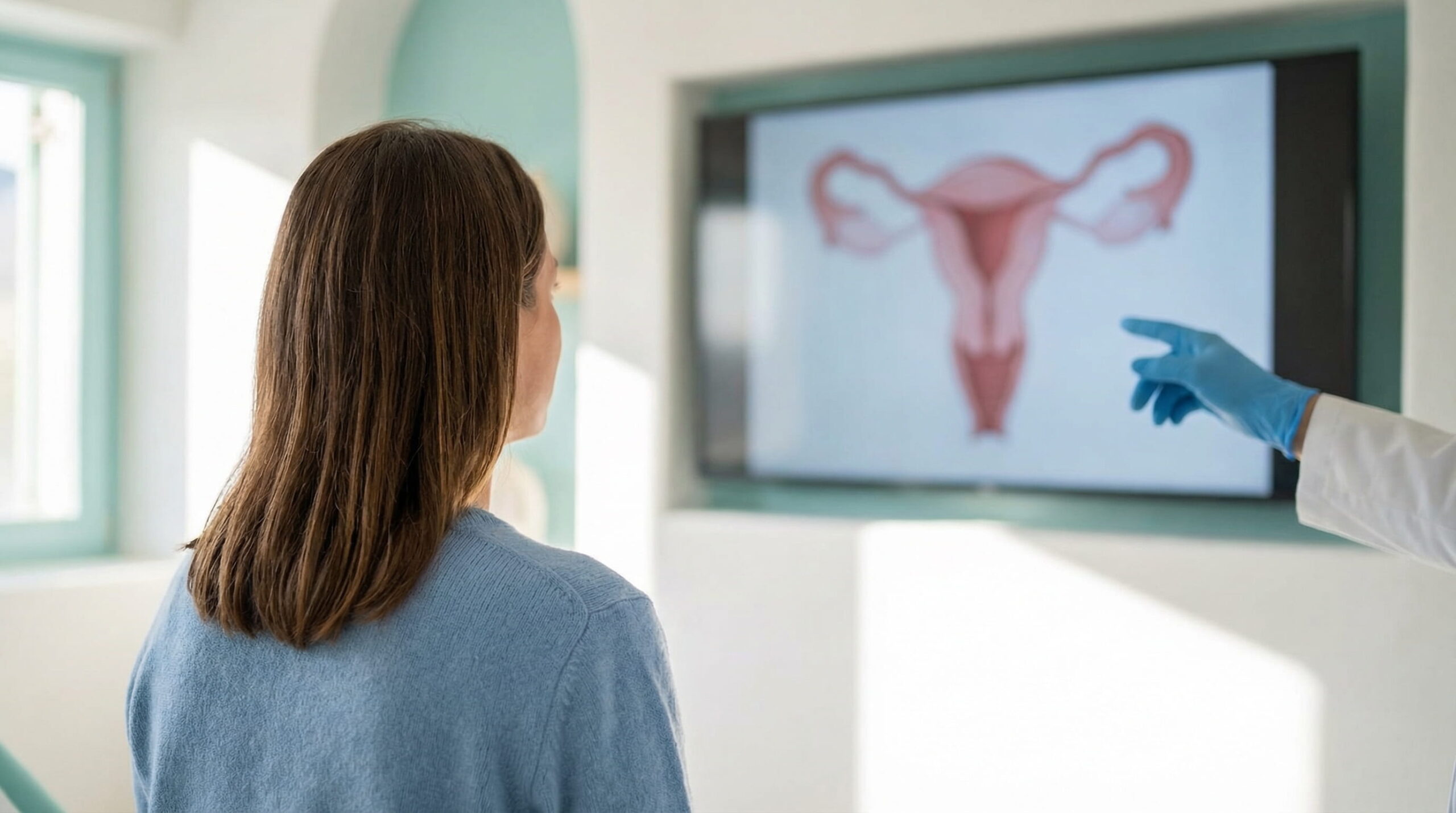
Uterine Polyps
Sources:
Endometrial Polyp (Uterine Polyps): Impact on Implantation and When Intervention Is Recommended
Specialist in Obstetrics and Gynecology
Similar Articles

Polycystic Ovaries: What They Mean and How They Can Influence Ovulation and Pregnancy
Specialist in Obstetrics and Gynecology

Fertilization of Eggs and Embryo Culture in IVF: How It Takes Place in the Laboratory
Specialist in Obstetrics and Gynecology

Advanced Investigations for Infertility: What Comes After the Basic Tests
Specialist in Obstetrics and Gynecology