

In Vitro Fertilization with donor eggs is a medical option used when a patient’s own eggs can no longer provide reasonable chances of obtaining viable embryos or when there are clear clinical reasons to avoid using the patient’s own eggs. In In Vitro Fertilization with donor eggs, the eggs come from a medically evaluated donor, and the pregnancy is carried by the patient after careful endometrial preparation and a personalized treatment plan.
In practice, In Vitro Fertilization with donor eggs may be discussed after reviewing reproductive history, hormonal and ultrasound investigations and the results obtained in previous attempts. The aim of this article is to explain clearly when In Vitro Fertilization with donor eggs is recommended and what it involves, step by step, without promises and without generalizations.
What In Vitro Fertilization with donor eggs means

In Vitro Fertilization (IVF) refers to the fertilization of the egg in the laboratory and the subsequent transfer of the embryo into the uterus. In In Vitro Fertilization with donor eggs, the eggs are not retrieved from the patient but come from a donor. The sperm may belong to the partner or may come from a donor, depending on the medical indication and the couple’s situation, and the resulting embryos are cultured in the laboratory before transfer.
It is important to understand that, in In Vitro Fertilization with donor eggs, the patient carries the pregnancy and goes through the stages of uterine preparation and monitoring, while the egg component, meaning egg quality and developmental potential, is ensured through donation. For full explanations about donation, criteria and process, the reference page is Egg Donation – complete guide.
When In Vitro Fertilization with donor eggs is recommended
The recommendation for In Vitro Fertilization with donor eggs usually appears when the evaluation of ovarian reserve and reproductive history indicates very low chances of obtaining eggs with good potential or when repeated attempts with the patient’s own eggs have not led to a result.

The most common situations in which In Vitro Fertilization with donor eggs may be considered include:
- ovarian insufficiency or significantly diminished ovarian reserve
- advanced reproductive age, associated with a lower probability of obtaining viable eggs
- poor ovarian response in previous attempts and a low number of eggs or embryos obtained
- repeated failures after embryo transfers in the context of an unfavorable embryology history
- certain situations involving genetic risk, in which the medical team may discuss alternatives depending on the context
The decision is not made based on a single test. Usually, age, stimulation history, parameters such as AMH and AFC interpreted in clinical context, previous ovarian surgery and the course of earlier attempts are all considered together. In many cases, before recommending In Vitro Fertilization with donor eggs, other strategies are also evaluated: protocol adjustments, optimization of endometrial receptivity, laboratory strategies and correction of modifiable factors.
For an overview of the stages and options in In Vitro Fertilization, it may also be useful to read In Vitro Fertilization (IVF) – complete guide.
What In Vitro Fertilization with donor eggs involves – the main stages

In Vitro Fertilization with donor eggs is a process that combines patient preparation, especially endometrial preparation, donor selection and laboratory work including fertilization, embryo culture and selection. The plan is individualized, but the general flow includes:
- initial evaluation and establishment of the indication
- donor selection and matching of relevant criteria
- endometrial preparation for transfer
- fertilization of the eggs in the laboratory and embryo culture
- embryo transfer, either in a fresh cycle or with frozen embryos, depending on the plan
- pregnancy test and early monitoring
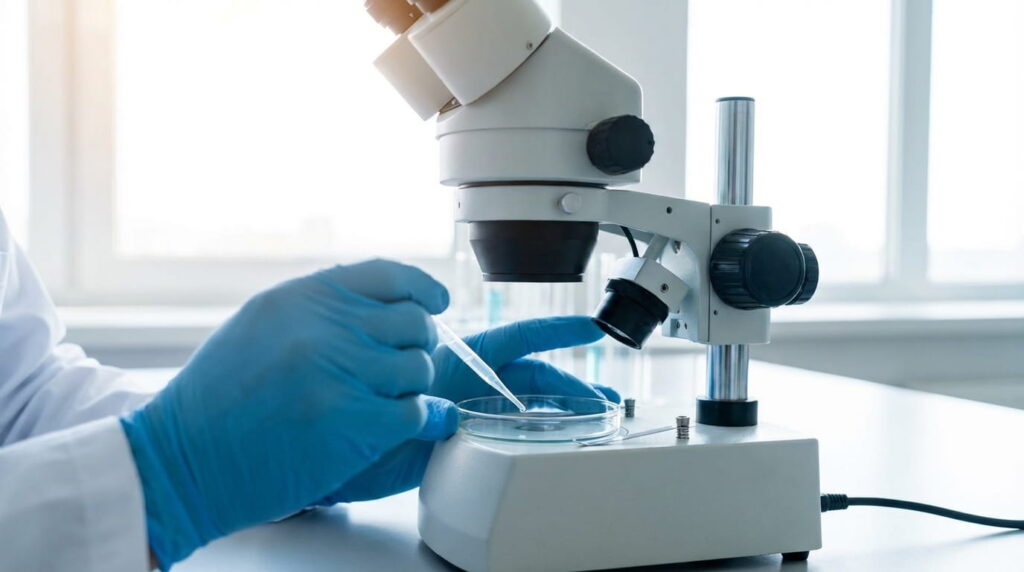
In practice, there are situations in which embryo cryopreservation and later transfer are preferred, especially when endometrial optimization or careful planning of the implantation window is needed. These decisions are part of the personalization of the In Vitro Fertilization with donor eggs procedure.
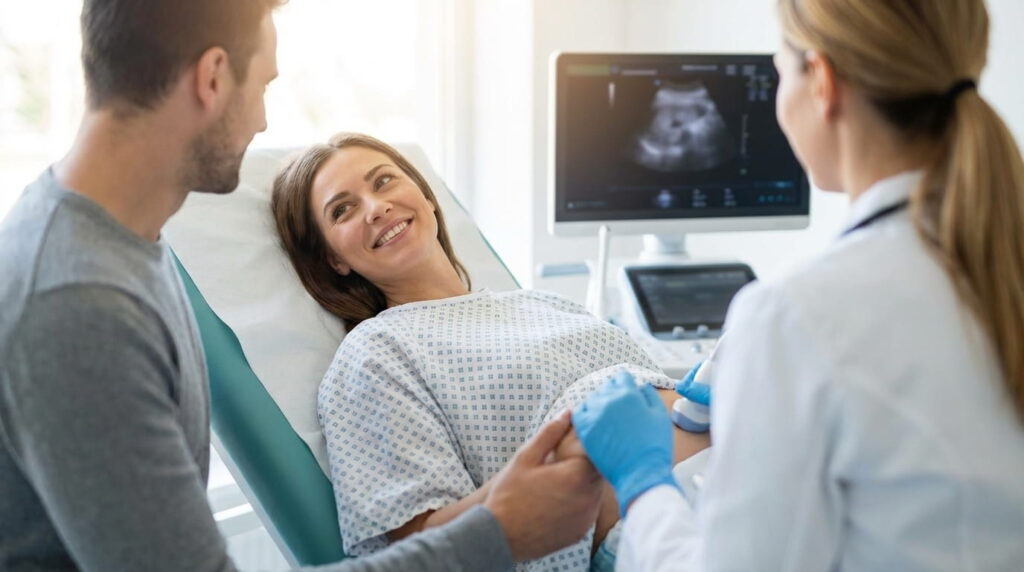
How the donor is selected and what safety in donation means
In donation programs, donor selection is based on medical and compatibility criteria, with investigations aimed at evaluating general health and reducing infectious or genetic risks within the limits of standard medical practice.
Usually, the process includes a clinical evaluation and specific tests according to protocol, as well as phenotypic and compatibility matching to the extent allowed by the program. In In Vitro Fertilization with donor eggs, the main objective remains the safety and quality of the process, not a “guarantee” of outcome.
For a clinically oriented treatment perspective, the information can also be complemented by the page In Vitro Fertilization (IVF).
“You deserve to be heard, seen, treated with respect, and supported throughout your life.”

Andreas Vythoulkas
Specialist in Obstetrics and Gynecology


Success chances in In Vitro Fertilization with donor eggs: what influences the result
In In Vitro Fertilization with donor eggs, the chances of success are influenced by several factors, and egg quality is only one variable. The outcome depends on the entire chain: laboratory performance, embryo development, endometrial receptivity, uterine history, general health status and, in some cases, sperm-related factors.
In practical terms, the discussion about success chances in In Vitro Fertilization with donor eggs should take into account:
- medical and uterine history
- the quality of the embryos obtained and how they develop in the laboratory
- the transfer strategy, fresh versus frozen embryo transfer, and endometrial preparation
Sometimes more than one transfer is needed to achieve an ongoing pregnancy, even in favorable conditions. In these situations, it matters greatly how the case is analyzed and what can be adjusted in the In Vitro Fertilization with donor eggs plan.
For a perspective closer to the lived treatment journey, In Vitro Fertilization (IVF) – patient experience may also be relevant.
Risks, limitations and aspects to consider
Like any medical procedure, In Vitro Fertilization with donor eggs has limitations and possible risks, which differ depending on the protocol and the patient’s particular profile. There may be reactions to the medication used for endometrial preparation, side effects and the need for closer monitoring of a pregnancy obtained through In Vitro Fertilization.
In addition, there is also an emotional dimension. For some people, the decision to undergo In Vitro Fertilization with donor eggs comes with questions related to acceptance, confidentiality or communication within the couple. A complete discussion should include this support dimension as well, depending on individual needs.
Preparation for In Vitro Fertilization with donor eggs
Before transfer, the goal is to ensure that the body is in the best possible condition to support a pregnancy. In practice, this means evaluations and optimizations related to the uterus, the endometrial preparation protocol and overall health.
Usually, the discussion includes recommended tests, modifiable risk factors and relevant gynecological history. In certain contexts, fertility preservation for the future may also be discussed, and for general information the page Egg Cryopreservation: what it is, how it is done and when it is recommended may be useful.
Costs and scheduling: what a program may include
The cost structure may vary depending on the protocol, the laboratory and the required steps, for example cryopreservation and later transfer. In some cases, eligible patients may also consider support options or specific programs.
For the current framework and criteria explained in clear terms, there is also National IVF Program 2025 – complete guide.
Frequently Asked Questions
In which situations is In Vitro Fertilization with donor eggs most often recommended?
Usually when ovarian reserve is very low, the response to stimulation was poor in previous attempts or when history indicates low chances with the patient’s own eggs. The recommendation for In Vitro Fertilization with donor eggs is made after correlating the tests with medical history and after a discussion about alternatives and realistic expectations.
Does the patient still need ovarian stimulation?
In most cases, ovarian stimulation for egg retrieval is not necessary, because the eggs come from the donor. In In Vitro Fertilization with donor eggs, the essential stage for the patient is endometrial preparation so that the transfer can take place under optimal conditions.
How is the endometrium prepared for transfer?
Endometrial preparation is carried out through a protocol established by the physician, with ultrasound monitoring and sometimes hormonal tests. In In Vitro Fertilization with donor eggs, this stage aims to synchronize the timing of the transfer with the optimal implantation window.
Can frozen embryos be transferred (FET)?
Yes. Frozen embryo transfer is frequently used and may be recommended depending on the treatment plan and the need for endometrial optimization. In In Vitro Fertilization with donor eggs, the choice between fresh transfer and frozen embryo transfer is made on an individualized basis.
How many embryos are usually transferred?
The number of embryos transferred depends on age, reproductive history, embryo quality and the recommendation of the medical team, with an emphasis on safety. In In Vitro Fertilization with donor eggs, single embryo transfer is often discussed in order to reduce the risk of multiple pregnancy.
Can the donor’s characteristics be selected?
In donation programs, matching is done according to medical and phenotypic criteria, within the limits of the clinic’s protocol and the applicable regulations. In In Vitro Fertilization with donor eggs, the main objective remains compatibility and safety.
Are there higher risks compared with IVF using the patient’s own eggs?
The risks differ depending on the patient’s profile and the specific features of the pregnancy obtained through In Vitro Fertilization, not only on the source of the eggs. In In Vitro Fertilization with donor eggs, careful monitoring and protocol personalization are essential for reducing risks.
What happens if the first transfer does not succeed?
An implantation failure does not automatically mean that the procedure is not appropriate. In In Vitro Fertilization with donor eggs, the case is reassessed: embryo quality, endometrial protocol, timing of transfer and possible uterine factors that may require further investigation, so that the next step is established on clear medical grounds.

Why choose Genesis Athens for In Vitro Fertilization with donor eggs
In a sensitive treatment, the real difference is made by the clarity of the medical plan, laboratory standards and the way each stage is designed for the specific case. At Genesis Athens, the indication for In Vitro Fertilization with donor eggs is discussed responsibly, with complete explanations about alternatives, steps and realistic expectations.
Continuity matters: from the initial evaluation and endometrial preparation to transfer and early monitoring, the goal is for decisions to be made based on medical data, in a calm dialogue and without pressure.
In practical terms, these principles translate into:
- individualized protocols and careful monitoring throughout preparation for transfer
- clear selection and safety criteria within the donation program
- integration of medical information into a plan explained in terms everyone can understand, so that each stage is predictable and logical
For additional explanations from a perspective dedicated exclusively to egg donation, the resource Everything About Egg Donation may also be useful.
Talk to a specialist about
In Vitro Fertilization with Donor Eggs

Sources:
In Vitro Fertilization With Donor Eggs: When It Is Recommended and What It Involves
Specialist in Obstetrics and Gynecology
Similar Articles

The First Days After a Positive Test: What Happens and What Is Normal
Specialist in Obstetrics and Gynecology

Robotic Surgery in Gynecologic Treatments
Specialist in Obstetrics and Gynecology

The Role of Hormones in IVF Success
Specialist in Obstetrics and Gynecology