

Robotic surgery in gynecology is an advanced form of minimally invasive surgery in which the surgeon controls very fine instruments with a highly detailed view of the surgical field. For many patients, this approach can mean greater precision and a smoother recovery, especially when anatomy is challenging (for example, extensive endometriosis or dense adhesions).
In a fertility context, robotic surgery for fertility-related conditions can be helpful when the goal is to correct a barrier to pregnancy—but the right decision always depends on the diagnosis, age, and reproductive plan.
What robotic surgery in gynecology means

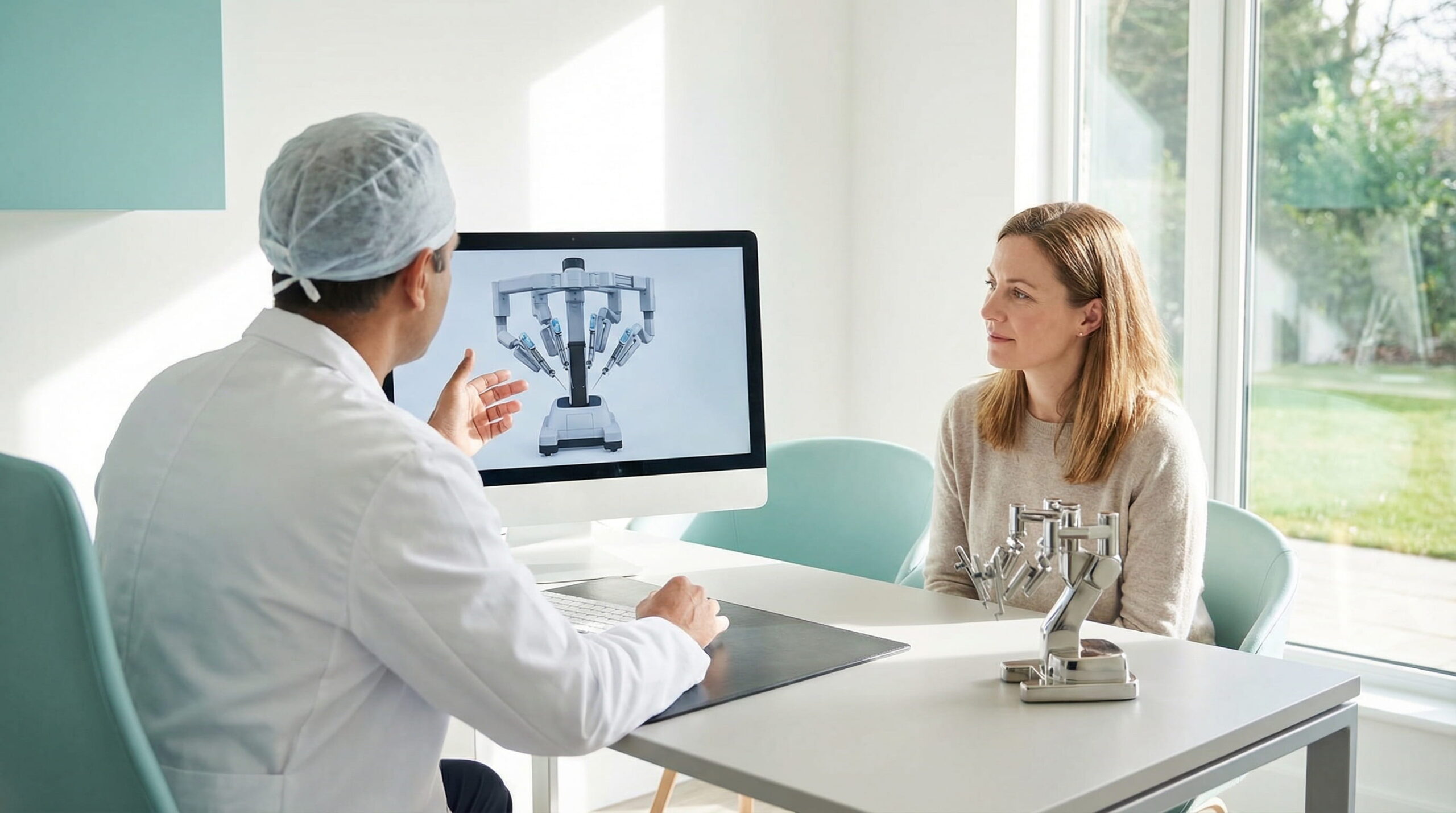
In simple terms, the procedure is performed by the surgeon, who operates from a console and controls instruments inserted through small incisions. The robotic system does not “operate on its own.” It translates the surgeon’s movements into very fine instrument movements, and the surgeon sees magnified, highly clear anatomy.
Robotic surgery doesn’t replace team expertise—it can enhance it, especially in cases requiring delicate dissection, tissue preservation, and careful bleeding control.
Who it may be suitable for
Indications for robot-assisted gynecologic surgery are similar to other minimally invasive techniques, but it may be especially relevant when the operation is complex or when conserving important structures is a priority.
Common gynecologic situations
Robot-assisted surgery may be considered in:
- Uterine fibroids (selected cases, including myomectomy with uterine preservation)
- Ovarian cysts (depending on type and size)
- Uterine pathology that requires surgical treatment
- Pelvic organ prolapse (depending on indication and chosen technique)
- Cases where anatomy is altered by prior surgery or chronic inflammation
Fertility-related situations
In fertility care, robotic surgery may have a role when it directly treats a factor that reduces conception chances, such as:
- Endometriosis
- Pelvic adhesions
- Certain fibroids that distort the uterine cavity
If you have an endometriosis diagnosis, the evaluation needs to be careful: the goal isn’t only “removing lesions,” but also protecting ovarian function and nearby organs. That’s why the approach should be integrated into your reproductive plan. For detailed options and management principles, see the resource on endometriosis treatment.
Robotic surgery in gynecology and fertility
Robotic fertility-related surgery is not a guarantee of pregnancy and is not automatically required before assisted reproduction. However, it can be valuable when it removes a real obstacle:
- an adhesion distorting the fallopian tubes
- endometriosis altering pelvic anatomy
- a fibroid interfering with implantation
At the same time, there are cases where the best strategy is not to delay fertility treatment just to “do surgery,” especially when the main limiting factor is age or low ovarian reserve. The decision is correct only after a full discussion about goals and constraints: natural conception vs assisted reproduction, time available, risks, and expected benefits.
When surgery may help before IVF (examples)
Robotic surgery may be considered before In Vitro Fertilization (IVF) when:
- there is severe pain and suspected endometriosis needing surgical treatment
- pelvic anatomy is affected by adhesions or masses that could make egg retrieval difficult
- certain lesions should be treated to reduce the risk of later complications
Note: this is always an individual decision—not every diagnosis requires surgery before IVF.
“You deserve to be heard, seen, treated with respect, and supported throughout your life.”

Andreas Vythoulkas
Specialist in Obstetrics and Gynecology


Types of robotic gynecologic procedures
Robotic surgery can be used for a wide range of operations, but what matters most is the goal (conservation, definitive treatment, symptom control) and the specifics of each case.
Myomectomy (fibroid removal with uterine preservation)
When preserving the uterus, the quality of suturing and uterine reconstruction is essential. In selected cases, a robot-assisted approach can help through improved visualization and fine tissue control, but the indication depends on fibroid number, location, and size.
Endometriosis and pelvic adhesions
Endometriosis can affect the ovary, tubes, peritoneum, and sometimes nearby organs. The aim is to treat clinically relevant disease and, when possible, restore anatomy—while respecting the reproductive plan.
Adhesions can “trap” ovaries or tubes, change anatomy, and worsen pain. In these cases, precision and team experience can make a real difference.
Ovarian cystectomy (in selected cases)
For cysts, the approach depends on lesion type and recurrence risk. In fertility contexts, the priority is minimizing impact on healthy ovarian tissue.
Hysterectomy (uterus removal)
This procedure has clear indications (severe symptoms, specific pathology). In fertility-oriented content, it should be mentioned in a balanced way: robotic gynecologic surgery includes definitive procedures—not only fertility-preserving ones.
Benefits and limitations: what you should know

For many patients, the advantages relate to being minimally invasive:
- small incisions
- earlier mobilization
- less postoperative discomfort
- recovery that is often easier than open surgery
However, outcomes depend not only on technology, but especially on proper indication, planning, and execution.
Important limitations
- Not all cases are suitable for robotic surgery.
- In some situations, standard laparoscopy—or even open surgery—may be safer.
- Intraoperative conversion (changing approach) may be needed for safety; this is not a “failure,” but a medical decision to control the situation optimally.
If you want to understand how minimally invasive approaches differ, see the overview on laparoscopy.
Safety and risks explained clearly
Any surgery carries risks, even minimally invasive procedures. Common general risks include:
- bleeding
- infection
- anesthesia reactions
- thrombosis (rare, but important)
In gynecology, there are also procedure-specific risks due to proximity to structures such as the bladder, ureters, and bowel, especially in cases with chronic inflammation, endometriosis, or adhesions.
In real-world practice, risk is reduced by the combination of:
- correct case selection
- an experienced team
- standardized surgical steps
- a well-organized recovery plan
Preparing for surgery
Before robotic gynecologic surgery, it helps to have a clear picture of what’s ahead. Preparation typically includes a full consultation, blood tests, imaging, and pre-anesthesia assessment. Depending on your situation, additional tests may be needed.
Questions worth discussing (practical checklist)
- What is the main goal in your case (symptom control, anatomical correction, fertility preservation)?
- What are the alternatives—and what is the cost of waiting?
- What happens if the surgeon finds a more complex situation than expected?
- When is it realistic to resume physical activity and, if relevant, attempts to conceive?
Recovery: what to expect
Recovery after robotic gynecologic surgery is often easier than after open surgery, but it’s not “instant.” In the first few days, you may have:
- incision discomfort
- fatigue
- bloating
- shoulder pain (from the gas used during laparoscopic/robotic surgery)
Your doctor will recommend a tailored plan for mobilization and pain control.
When to seek medical help
Symptoms such as persistent fever, worsening pain not responding to treatment, heavy bleeding, or severe urinary symptoms should be evaluated promptly.
Frequently Asked Questions
Does the robot “operate by itself”?
No. The surgeon performs the operation, and the robotic system is fully controlled by the surgeon. The technology improves fine movement and visualization, it does not replace medical decisions.
Is robotic surgery always better than laparoscopy?
Not always. Some cases are well managed with standard laparoscopy. In other situations, robot assistance can offer technical advantages. The best option is the one that fits your diagnosis and goal.
Can robotic surgery improve fertility?
It can help when it treats a fertility-limiting cause, such as endometriosis, adhesions, or certain fibroids. But it does not automatically increase pregnancy chances in every context, and sometimes the right strategy is to proceed directly to assisted reproduction.
When does surgery make sense before assisted reproduction?
When it corrects a real obstacle or lowers complication risk, for example significant adhesions, symptomatic endometriosis, or lesions affecting anatomy. The decision is individual and depends on time, age, and your plan.
Is recovery faster?
Often yes compared to open surgery, but “faster” does not mean “no recovery.” You still need several days of reduced pace and to follow medical instructions.
Will scars be visible?
Incisions are usually small and often heal well, but scar appearance depends on skin type, healing, and local care. Your doctor can suggest simple measures to optimize cosmetic results.
What are the gynecology-specific risks?
Beyond general surgical risks, there are risks related to nearby structures, such as the bladder, ureters, and bowel, especially with inflammation, endometriosis, or adhesions. That is why preoperative assessment and team experience matter.
If the surgical approach is changed during surgery, is that concerning?
Not necessarily. Conversion is done for patient safety, for example for better bleeding control or when anatomy is far more complex than expected. It is a responsible medical decision.
Why choose Genesis Athens for robotic gynecologic surgery
In surgery, technology matters—but it’s not the only criterion. What matters most is that the recommendation is correct and the intervention is integrated into a clear medical plan with realistic goals: symptom control, treating the cause, and—when relevant—protecting reproductive potential.
At Genesis Athens, the approach starts with a complete case evaluation and selecting the technique that best fits your situation—not a “standard” solution. Especially in fertility-related cases (endometriosis, adhesions, fibroids), the treatment plan should align with next steps, including assisted reproduction options when indicated. For additional context, you may find helpful resources on IVF (In Vitro Fertilization), endometriosis treatment, and laparoscopy.
If you already have a diagnosis or strong suspicion, the most useful next step is to discuss your goal and the best benefit–risk option for your specific case.
Speak with a specialist about
robotic gynecologic surgery
Sources:
- ACOG – Robot-Assisted Surgery for Noncancerous Gynecologic Conditions (Committee Opinion)
- RCOG – Robotic surgery in gynaecology (Scientific Impact Paper No. 71)
- SAGES/MIRA – Consensus Document on Robotic Surgery
- NICE – Endometriosis: diagnosis and management (NG73)
- ESHRE – Guideline: Endometriosis (2022)
Robotic Surgery in Gynecologic Treatments
Specialist in Obstetrics and Gynecology
Similar Articles

Male Fertility Test: Recommended Investigations and Costs
Specialist in Obstetrics and Gynecology

Important Prenatal Tests During Pregnancy
Specialist in Obstetrics and Gynecology

Supportive Treatment in Pregnancy After IVF: What It May Include and How Long It Lasts
Specialist in Obstetrics and Gynecology