

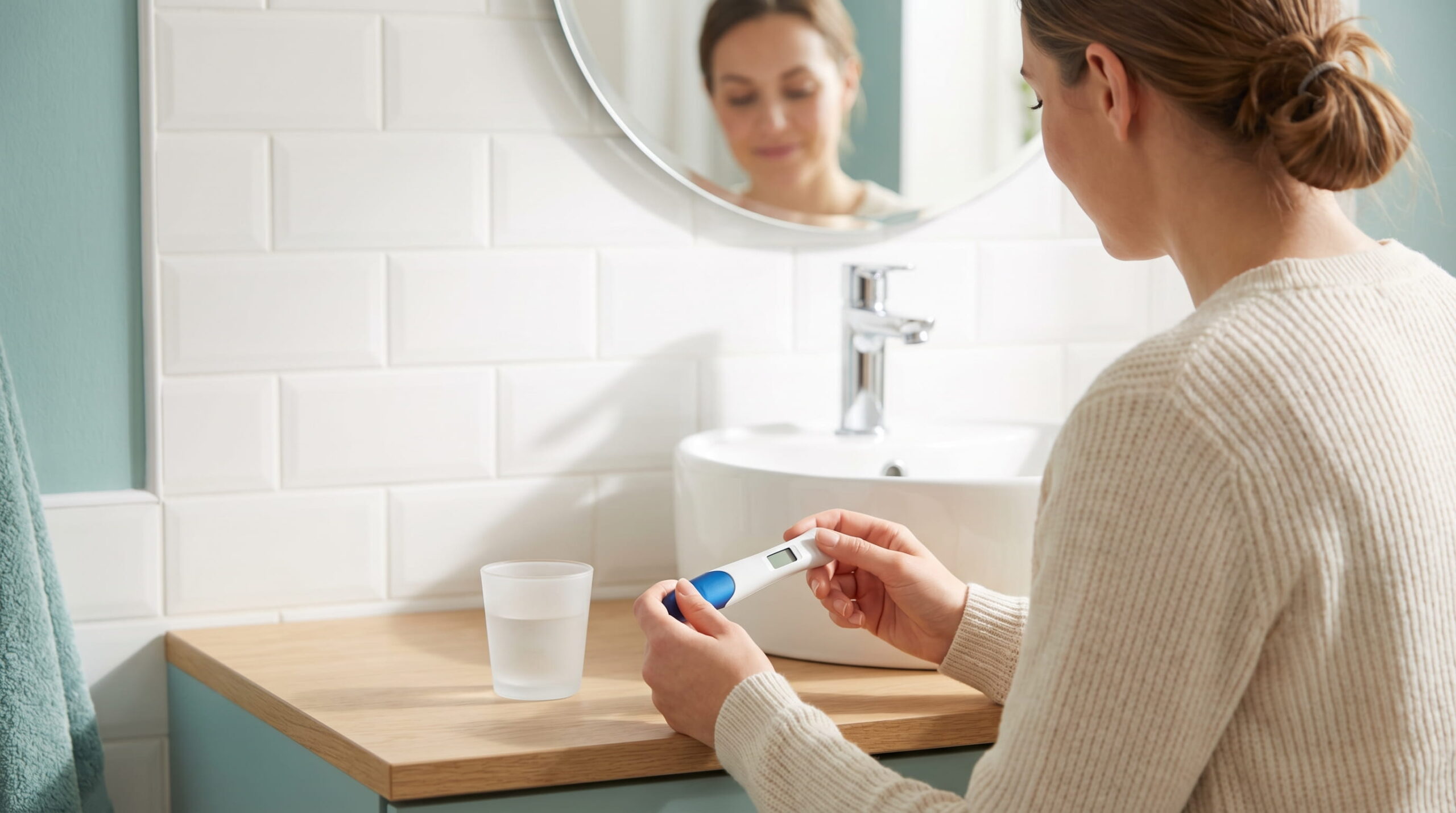
When a menstrual period is late or pregnancy is suspected, one of the first questions is how to take a pregnancy test so that the result is accurate. The timing of the test, the way it is used, and the interpretation of the result can significantly influence how clear the answer is. For patients who have gone through assisted reproduction procedures, including In Vitro Fertilization (IVF), choosing the right time for testing is even more important.
A pregnancy test works by detecting the hormone hCG, which appears after implantation. Most urine tests are most reliable from the first day of a missed period, and testing too early can lead to a false negative result.
How a Pregnancy Test Works and What It Actually Detects
To understand how to take a pregnancy test, it helps to first know what it measures. Urine tests detect the presence of the hormone hCG, which is produced after implantation of the fertilized egg. This hormone rises during the first weeks of pregnancy, but its level may still be too low to detect if testing is done too early.
There are strip tests, cassette tests, and midstream tests, but the principle is the same: the urine sample comes into contact with the reactive area, and the result appears after the interval indicated in the instructions. The differences between products mainly relate to sensitivity, the method of application, and the way the result is displayed. In practice, for patients, correct use matters more than the form of the test.
When the Right Time for Testing Is
Timing is essential when you want to know how to take a pregnancy test correctly and when the result is worth interpreting. Most guidelines recommend testing from the first day of a missed period. Some highly sensitive tests can detect pregnancy earlier, but reliability is lower before the expected date of menstruation.
If You Have a Regular Cycle
If your period usually comes at predictable intervals, the best time is the very first day your period is late. This is the point at which the hCG level is usually high enough to be detected by most urine tests.
If You Have an Irregular Cycle
If your cycle is irregular, the timing becomes more difficult to calculate. In these situations, a useful recommendation is to take the test at least 21 days after the last unprotected sexual contact. This approach reduces the risk of getting a negative result simply because testing was done too early.
After In Vitro Fertilization or Other Fertility Treatments
After assisted reproduction procedures, the urge to test early is understandable, but not always helpful. If you are following a post embryo transfer protocol or are in the waiting period, it is safer to follow the recommendation of the medical team. In these contexts, early testing can create confusion, especially if hCG has been used during treatment. As additional context, it may also be useful to consult the guide about preparing for a pregnancy after IVF.
How to Take a Pregnancy Test Correctly, Step by Step
For many patients, the practical question remains the same: how do you take a pregnancy test without simple mistakes that may change the result?
First, check the expiration date and read the exact instructions for the product you have chosen. Even if tests seem similar, the waiting time and method of use may differ.
Second, if you are testing very early or want the best chance of detection, first morning urine is preferable. Although some tests can be used at any time of day, more concentrated urine increases the chance of a correct result when hCG is still low.
Then, follow exactly one of the methods indicated by the manufacturer: either place the absorbent tip in the urine stream or collect urine in a clean container and apply the sample according to the instructions. Do not extend the exposure time and do not improvise the steps.
After that, place the test on a flat surface and wait only for the interval mentioned in the instructions. This is an important point in the discussion of how to take a pregnancy test, because reading it too early or too late can lead to incorrect interpretation.
“You deserve to be heard, seen, treated with respect, and supported throughout every stage of life.”

Andreas Vythoulkas
Specialist in Obstetrics and Gynecology


How to Interpret the Result Without Confusion
Understanding the result is just as important as using the test. It is not enough to know how to take a pregnancy test. You also need to know when the result can be considered meaningful.
Positive Result
A positive result means, in most cases, that pregnancy is present. Even a faint line can indicate the presence of hCG, as long as it appears within the time interval specified by the manufacturer. After a positive result, the next step is medical confirmation through consultation and, when needed, beta-hCG testing or ultrasound at the recommended time.
Negative Result but the Period Is Still Late
A negative result does not always rule out pregnancy. If testing was done too early, if the urine was diluted, or if ovulation happened later than expected, the hCG level may still be below the detection threshold. In this situation, it is recommended to repeat the test in 48 hours to 7 days, depending on the context, or speak with your doctor.
Very Faint Line or Unclear Result
A very faint line may appear in very early pregnancy, but also in situations where the test is read incorrectly or too late. If the result is unclear, do not interpret an ambiguous image on your own and do not keep the test for another reading many hours later. It is best to repeat the test with a new product or do a blood test when recommended by your doctor.
What Mistakes Can Affect the Result
When asking how to take a pregnancy test correctly, it is worth avoiding a few common mistakes. The most important one is testing too early. Other frequent errors include drinking too much liquid before the test, using an expired test, not following the timing given in the instructions, or interpreting the result after the recommended window has passed.
In certain situations, the medical context also matters. After fertility treatments, after a recent pregnancy loss, or in the case of contradictory results, interpretation should be done cautiously and linked to medical history. For patients interested in treatment pathways and eligibility, information about the National IVF Program 2025, complete guide, and the National IVF Program 2026 may also be useful.
Frequently Asked Questions
Can the test be taken before the missed period?
Yes, some highly sensitive tests can detect pregnancy before the missed period, but the result is less certain. The earlier you test, the higher the risk of a false negative.
Is first morning urine mandatory?
Not always, but it is often useful, especially when testing very early. A more concentrated sample can increase the chance of detecting hCG when it is still at a low level.
If the second line is very faint, is the result positive?
It may be positive, as long as the line appears within the time interval indicated in the instructions. Still, in the case of an unclear result, it is recommended to repeat the test or seek medical confirmation.
Does a negative test completely rule out pregnancy?
No. If the test was done too early, pregnancy may still be present even if the result is negative. That is why repeating the test after a few days is sometimes necessary.
How quickly should the result be read?
Exactly within the interval specified by the manufacturer. Reading it too soon or too late can lead to incorrect interpretation, including confusion with evaporation lines.
When is the beta-hCG blood test useful?
This test may be useful when the urine result is unclear, when fertility treatments are involved, when earlier confirmation is needed, or when the doctor wants a more precise evaluation.
After In Vitro Fertilization, can I do a home test immediately?
It is not recommended to test according to your own schedule. After In Vitro Fertilization, the timing of testing must be established according to the protocol followed, in order to avoid misleading results.
What should you do if you have a positive test and develop pain or bleeding?
A positive result associated with significant pain, dizziness, bleeding, or a generally unwell state requires prompt medical evaluation. The test confirms the presence of hCG, but it cannot by itself show the progression or location of the pregnancy.

Why Choose Genesis Athens for the Correct Evaluation of a Pregnancy Test and the Next Steps
At Genesis Athens, the evaluation of a positive or unclear result is not treated in isolation, but integrated into a coherent medical pathway. For patients, this means access to an organized approach in which testing, confirmation, and further recommendations are correlated with gynecological and reproductive history.
Especially for patients who have undergone fertility treatment or are at the beginning of pregnancy monitoring, clarity regarding the next steps is essential. Genesis Athens provides a medical framework in which interpretation of the result is not reduced to two lines on a test, but is placed in clinical context, with attention to timing, symptoms, and the need for proper confirmation.
This approach is important both for patients at the beginning of a spontaneous pregnancy and for those following an assisted reproduction pathway. In such situations, what makes the difference is not only the test itself, but also the way in which the result is evaluated and integrated into the medical plan.
Speak with a specialist about
How to Take a Pregnancy Test Correctly
Sources:
How to Take a Pregnancy Test Correctly and When to Interpret the Result
Specialist in Obstetrics and Gynecology
Similar Articles

Transvaginal Ultrasound in Infertility Evaluation: What Information It Provides Before IVF
Specialist in Obstetrics and Gynecology

Lifestyle in Pregnancy After IVF: Recommendations for the First Weeks
Specialist in Obstetrics and Gynecology

AMH and Ovarian Reserve: How Values Are Interpreted and What They Mean for IVF
Specialist in Obstetrics and Gynecology