

In an In Vitro Fertilization (IVF) cycle, one of the most important stages takes place in the laboratory. For many couples, this part remains less visible, even though it is where egg fertilization, monitoring of embryo development, and selection of the embryos that can move forward to transfer actually happen. That is exactly why fertilization and embryo culture in IVF deserve to be explained clearly, step by step, in accessible medical language.
When you better understand how the laboratory works, it becomes easier to interpret medical recommendations, ask the right questions, and have realistic expectations. Fertilization and embryo culture in IVF do not mean only “forming embryos,” but a carefully controlled process in which each stage focuses on quality, safety, and traceability of the biological material.
What Fertilization and Embryo Culture in IVF Mean
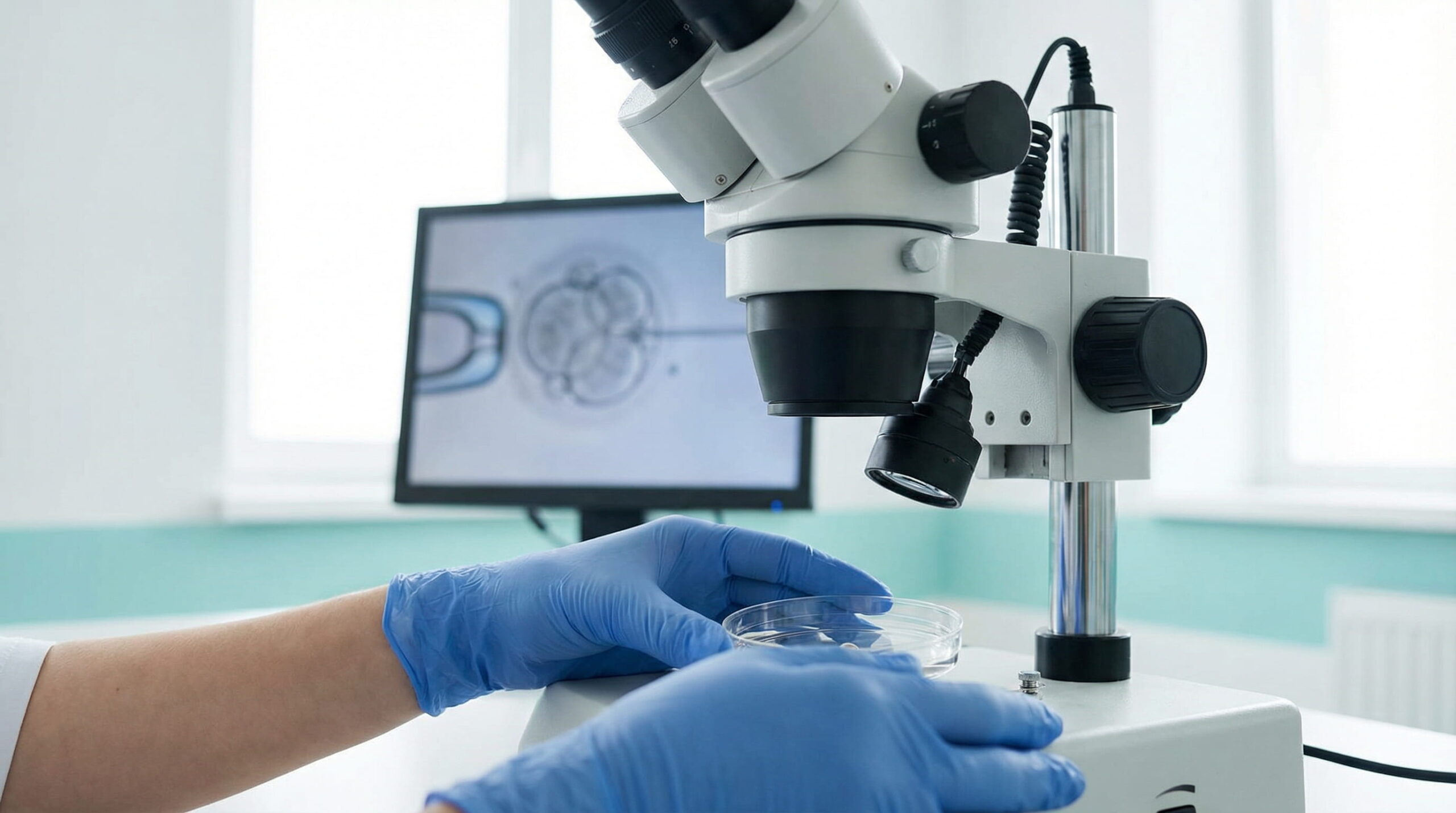
In short, fertilization and embryo culture in IVF describe the interval between egg retrieval and the moment when one of the embryos may be transferred or, in certain cases, prepared for additional analysis or cryopreservation. The eggs are brought into contact with sperm in the laboratory and, if fertilization occurs successfully, the resulting embryos are kept under strictly controlled conditions for several days so that their development can be monitored.
This stage is essential because not all eggs fertilize, not all embryos develop in the same way, and not every embryo has the same developmental potential. For that reason, fertilization and embryo culture in IVF represent a combination of reproductive biology, laboratory technology, and rigorous embryological assessment criteria.
How Egg Fertilization Takes Place in the Laboratory
After egg retrieval, the eggs are identified, prepared, and assessed in the laboratory. At the same time, the sperm sample is processed in order to select the sperm cells with the best characteristics for the procedure. From this point, fertilization and embryo culture in IVF truly begin.
Conventional Fertilization
In conventional fertilization, the egg is placed in contact with a controlled number of sperm cells, and fertilization takes place in the culture medium. The next day, the embryologist checks whether fertilization has occurred normally. In laboratory practice, fertilization assessment looks for specific signs, and normally fertilized eggs are separated for continued embryo culture.
When ICSI May Be Recommended
In other situations, the doctor may recommend IVF vs. ICSI: differences, advantages, and the right choice, especially when there is a significant male factor or when the clinical context suggests that ICSI may be more appropriate. In ICSI, a single sperm is injected directly into the egg. The difference is technical, but the aim remains the same: achieving proper fertilization and embryos that can be followed in culture.
It is important to know that the choice between conventional fertilization and ICSI is not made automatically, but according to medical history, sperm quality, reproductive age, and the particularities of the cycle. Fertilization and embryo culture in IVF should therefore be viewed in the context of the entire protocol, not as an isolated step.
How Embryo Culture Is Monitored from Day 1 to Blastocyst
After fertilization is confirmed, embryo culture begins. The embryos are maintained in incubators and in special media, under controlled conditions of temperature, pH, and, where applicable, oxygen. Laboratory guidelines emphasize the need to reduce environmental variation, because the stability of these conditions supports embryo development.
What the Embryologist Checks in the First Days
In the first days, the embryologist monitors the rhythm of cell division and the relevant morphological features. Assessment does not mean only “counting cells,” but a standardized analysis of criteria that help estimate developmental potential. Fertilization and embryo culture in IVF therefore include continuous and documented observation, not a simple passive wait until transfer.
Why Culture Sometimes Continues Until Day 5
In certain cases, culture may continue to the blastocyst stage, meaning around day 5 or 6. This approach may allow for finer embryo selection and better synchronization with the moment of transfer. HFEA shows that, after fertilization, embryos may be allowed to develop for between two and six days, and ASRM notes that blastocyst transfer may offer advantages in certain clinical contexts, especially in patients with a good prognosis.
However, not every cycle should automatically be extended to day 5. The number of eggs, the number of available embryos, your reproductive history, and the clinical objective all influence this decision. That is why fertilization and embryo culture in IVF must be individualized, not rigidly standardized for all patients.
How the Decision Is Made About Which Embryo May Be Transferred or Analyzed Further
At the end of the culture period, the embryologist and the doctor discuss which embryo has the most suitable profile for transfer, cryopreservation, or, in some cases, additional testing. Fertilization and embryo culture in IVF do not, in practice, stop at the moment when the embryo appears, but continue through its responsible selection.
Morphological Assessment
Selection is based mainly on morphological assessment of the embryos, performed at standardized moments. For blastocysts, elements such as the degree of expansion and the appearance of key structures are examined. These criteria do not offer absolute certainty, but they help the medical team choose the embryos with the best prospects in the given clinical context.
When Embryo Biopsy and PGT-A Enter the Discussion
If there is a medical indication, the doctor may recommend the role of genetic counseling before IVF, and later embryo biopsy and screening for aneuploidy, known as PGT-A, may be discussed. PGT-A looks for abnormalities in chromosome number, but its usefulness is not the same for all patients and must be analyzed individually, in a clearly defined clinical and genetic context.
This is where it becomes very clear why fertilization and embryo culture in IVF are closely linked to the rest of the medical decisions. The quality of embryo development, the number of embryos obtained, and reproductive history may influence whether only transfer is discussed or also preimplantation genetic testing.
“You deserve to be heard, seen, treated with respect, and supported throughout every stage of life.”

Andreas Vythoulkas
Specialist in Obstetrics and Gynecology


What Is Important to Know About Safety and Control in the IVF Laboratory
A high-performing IVF laboratory does not mean only equipment, but also strict procedures. ESHRE guidelines emphasize patient identification at critical steps, clear labeling, traceability, control of the culture environment, standardization of assessments, and proper handling of biological material. All of these protect the safety and consistency of the process.
For you, this means that fertilization and embryo culture in IVF take place within a framework in which each stage is checked, documented, and correlated with the entire medical plan. It is not only about obtaining embryos, but about the correct handling of the whole laboratory pathway.
Frequently Asked Questions
How long do fertilization and embryo culture in IVF take?
In general, fertilization is checked about one day after egg retrieval, and embryo culture may continue for between 2 and 6 days, depending on embryo development and the medical strategy established for transfer or cryopreservation.
Do all retrieved eggs fertilize?
No. Even in a well-managed cycle, not all eggs are mature, not all fertilize, and not all resulting embryos continue to develop at the same pace. This is a normal aspect of clinical embryology.
What is the difference between conventional IVF and ICSI?
In conventional IVF, the egg is placed in contact with sperm in the laboratory. In ICSI, the embryologist directly injects one sperm into the egg. The choice depends on the medical indication and the characteristics of the sperm sample.
What does it mean when an embryo reaches the blastocyst stage?
It means that the embryo has continued to develop until around day 5 or 6. This stage can offer additional information for selection, but not all cases require or optimally allow extended culture to the blastocyst stage.
How is the embryo chosen for transfer?
Selection is based on standardized embryological assessment, including morphological criteria and the timing of development. The final decision also takes your medical context into account, not only the appearance of the embryo considered in isolation.
Is embryo biopsy mandatory?
No. Embryo biopsy is not a routine step for all patients. It is discussed when there are clear medical indications and, usually, after genetic counseling and careful assessment of benefits and limitations.
Does PGT-A guarantee selection of the “perfect” embryo?
No. PGT-A may provide information about chromosome number, but it does not automatically guarantee the success of a cycle and is not equally useful for all categories of patients. The indication must be personalized.
Why does the laboratory matter so much in IVF?
Because fertilization and embryo culture in IVF depend on the control of environmental conditions, the standardization of procedures, the experience of the team, and the proper traceability of each stage. The laboratory directly influences the quality of the process, not only the technical part that remains invisible to the patient.

Why Choose Genesis Athens for Fertilization of Eggs and Embryo Culture in IVF
At Genesis Athens, fertilization and embryo culture in IVF are integrated into a medical framework in which clinical decisions, embryology, and genetic evaluation can be correlated coherently, without fragmenting the patient’s pathway. For you, this means more clarity between the initial recommendation, the course of the cycle, and the next steps, whether we are talking about transfer, cryopreservation, or additional investigations.
Another important advantage is the team-based logic. In such a sensitive process, what matters is not only the procedure itself, but also the way in which consultation, laboratory indication, embryo monitoring, and the discussion of available options are connected. When these stages are well coordinated, you receive clearer information and better-argued recommendations.
In addition, Genesis Athens can support this stage through a modern, institutional, and carefully standardized approach in which the emphasis is not on absolute promises, but on medical rigor, process control, and responsible communication. In a field where every detail matters, that coherence makes the difference.
Speak with a specialist about
The fertilization and embryo culture in IVF
Sources:
Fertilization of Eggs and Embryo Culture in IVF: How It Takes Place in the Laboratory
Specialist in Obstetrics and Gynecology
Similar Articles

Bacterial Vaginosis: How It Influishes Fertility and What to Do Before Procedures
Specialist in Obstetrics and Gynecology

The Role of Hormones in IVF Success
Specialist in Obstetrics and Gynecology

How You Are Recommended to Sleep During Pregnancy
Specialist in Obstetrics and Gynecology