

Adenomyosis is a gynecological condition frequently discussed when painful menstruation, heavy bleeding or difficulties in achieving a pregnancy occur. In infertility evaluation, it is important for this possible cause to be analyzed in a broader context, together with the condition of the uterus, the fallopian tubes, the ovaries and the reproductive history. In certain situations, the therapeutic pathway may also include options from the area of in vitro fertilization (IVF), but the first step remains a correct and complete evaluation. In this context, the topic of adenomyosis and fertility becomes relevant for many patients who are trying to better understand the causes of delays in conception.
What Adenomyosis Is and Why It Matters in Fertility
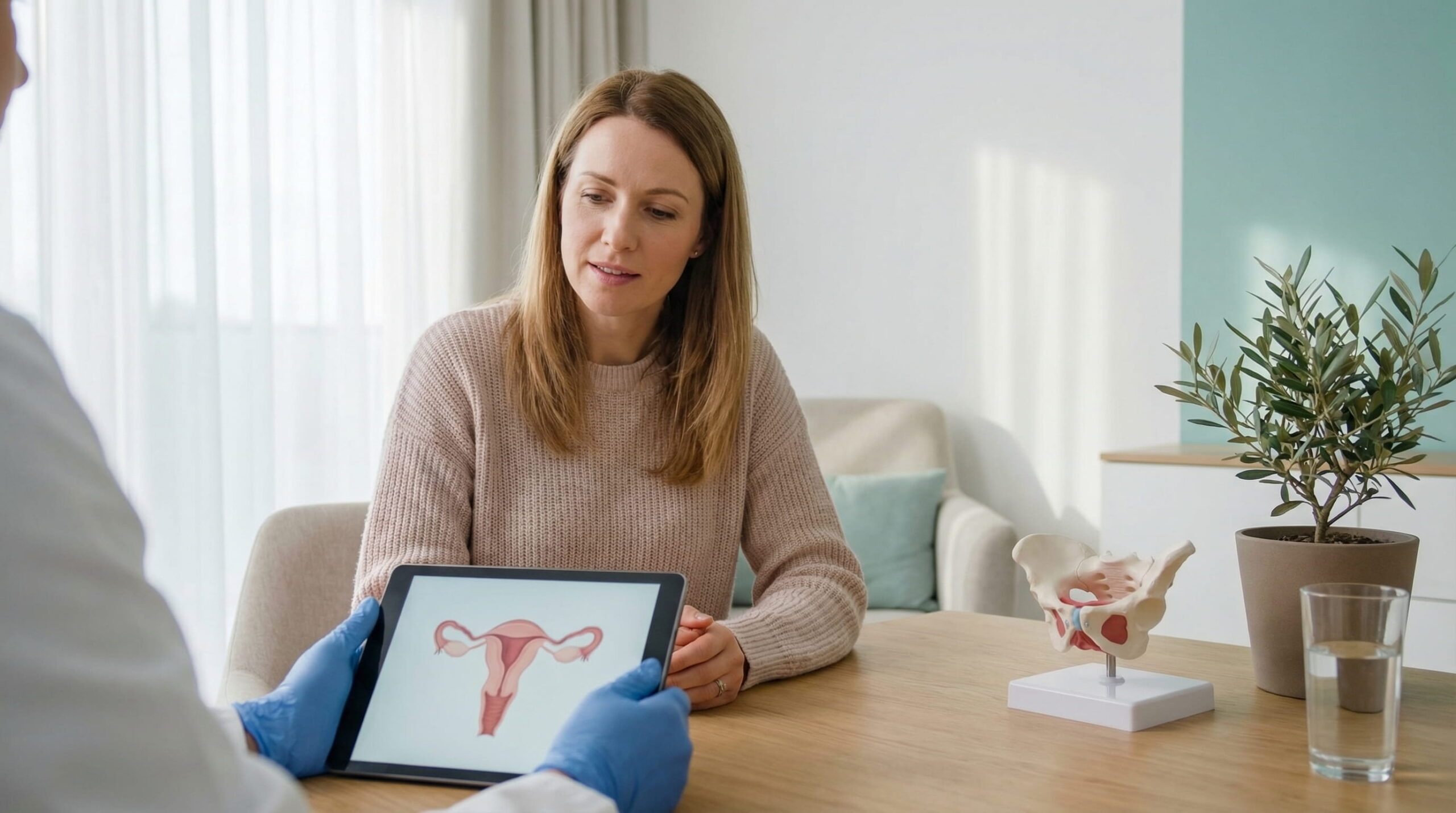
Adenomyosis occurs when tissue similar to the endometrium, meaning the lining that covers the inside of the uterus, develops in the muscular wall of the uterus. This change can lead to local inflammation, thickening of the uterine wall and symptoms that vary from mild to significant. The most frequent manifestations are intense menstrual pain, a feeling of pelvic pressure, chronic discomfort and heavier menstrual bleeding.
For many patients, the connection between adenomyosis and fertility is not obvious at first. The condition does not influence only daily comfort, but may also have relevance in evaluating the ability to achieve and maintain a pregnancy. The uterus does not only have the role of carrying a pregnancy, but also of supporting embryo implantation and the normal development of pregnancy in the early stages. When the structure or functionality of the uterus is affected, this process can become more difficult in some cases.
Adenomyosis can exist on its own, but it can also be associated with other gynecological conditions, especially endometriosis. For this reason, when the symptoms suggest more than a single cause, it is natural for the evaluation to also include the discussion about endometriosis. In practice, the association between adenomyosis and fertility becomes even more important when several pathologies coexist that may influence the reproductive journey.
In What Way Adenomyosis Can Influence Achieving a Pregnancy
The relationship between adenomyosis and fertility is not identical in all cases. Some patients with adenomyosis achieve a spontaneous pregnancy without major difficulties. In other situations, however, delays in conception or a more complicated reproductive journey may appear. That is exactly why the diagnosis should not be interpreted rigidly, but according to age, ovarian reserve, symptoms, any previous interventions and the presence of other infertility factors.
One of the explanations discussed in medical practice is that adenomyosis may influence uterine receptivity. In other words, the uterus may become a less favorable environment for implantation. In addition, uterine contractions may be altered and local inflammation may contribute to a less balanced environment for the beginning of a pregnancy. For this reason, the discussion about adenomyosis and fertility must take place in a properly evaluated clinical setting, not only at a theoretical level.
This does not mean that adenomyosis excludes the chance of having children. It does mean, however, that adenomyosis and fertility must be analyzed together, not separately. There are cases in which symptom management and the careful choice of the right time for conception are sufficient. In other cases, when other factors also coexist, the doctor may recommend an assisted reproduction pathway, including IVF treatment, if this is the solution with better chances for that specific situation.
Another aspect is also important: the severity of the symptoms does not always reflect exactly the impact on fertility. One patient may have significant pain and relatively preserved fertility, while another patient may have subtle symptoms but real conception difficulties. That is why adenomyosis and fertility must be viewed in a nuanced relationship and the evaluation must remain individualized.
How the Diagnosis Is Established and What Options Exist When Pregnancy Is Desired
The diagnosis of adenomyosis is established by correlating symptoms with the clinical examination and imaging investigations. Transvaginal ultrasound is often the first useful tool and in certain situations pelvic MRI may also be recommended, for a clearer evaluation of the uterine structure. In the context of infertility, however, investigations do not stop at the uterus. As a rule, tubal patency, ovarian function and any associated conditions are also analyzed.
In some cases, especially when there is suspicion of associated pathology or significant pelvic pain, investigations or interventions from the area of laparoscopy in fertility may also become relevant. If endometriosis lesions are also confirmed, the therapeutic plan may also include elements from the area of endometriosis treatment, depending on the reproductive goal and the complete clinical picture.
When there is a desire for pregnancy, the therapeutic strategy must be chosen with caution. Pain control is important, but not every option is suitable for a patient who wants conception in the near future. Sometimes a conservative approach is preferred, while in other cases a treatment stage is necessary before attempts to achieve pregnancy. In situations in which reproductive timing is an important factor, decisions must be made without unnecessary delays, but also without rushed interventions.
From a clinical perspective, the objective is not only the treatment of a condition, but the construction of a realistic plan for achieving a pregnancy. This requires evaluation of the entire reproductive context, not only of a single diagnosis. Within this framework, adenomyosis and fertility must be approached together, in order to understand the real impact of the condition and to choose the appropriate solutions depending on each case.
“You deserve to be listened to, seen, treated with respect and supported throughout life.”

Andreas Vythoulkas
Specialist in Obstetrics and Gynecology


Frequently Asked Questions
Does adenomyosis automatically mean infertility?
No. Although there is a connection between adenomyosis and fertility, the diagnosis does not automatically mean infertility. There are patients who achieve a spontaneous pregnancy and the real impact depends on several medical factors analyzed together.
What symptoms may suggest that evaluation is needed?
Very painful menstruation, heavy bleeding, persistent pelvic pain and a feeling of pressure in the pelvis deserve closer investigation, especially if there are also difficulties in achieving a pregnancy. In this context, adenomyosis and fertility can become an important topic during the consultation.
Can a pregnancy be achieved if adenomyosis is present?
Yes, it is possible. The prognosis differs from one case to another and the chances depend on age, ovarian reserve, the severity of the condition and any associated problems.
Is IVF always needed if adenomyosis is present?
No. IVF is not necessary in all cases. Some patients can achieve pregnancy naturally and others may need additional treatments or assisted reproduction only after a complete evaluation of the reproductive context.

Why Choose Genesis Athens for Fertility Evaluation in the Context of Adenomyosis
When there is suspicion of a condition that may influence both daily comfort and reproductive chances, the evaluation must be carried out in a well-organized medical setting with experience in fertility. Genesis Athens approaches these situations by integrating investigations, specialist consultation and therapeutic options into a coherent plan adapted to each patient.
In the context in which adenomyosis and fertility must be analyzed together, correctly differentiating between the symptoms caused by this condition and those that may come from other associated pathologies is essential. A team specialized in reproductive medicine can evaluate more precisely the real impact on fertility and can guide the patient toward the appropriate steps, whether it is monitoring, treatment or assisted reproduction.
For many patients, medical clarity is just as important as the treatment itself. A specialized center offers not only therapeutic options, but also a realistic understanding of the situation, in clear, balanced and responsible language.
Talk to a specialist about
Adenomyosis and Fertility
Sources:
Adenomyosis and Fertility: What Is Important to Know
Specialist in Obstetrics and Gynecology
Similar Articles

The Link Between Endometriosis and Early Menopause
Specialist in Obstetrics and Gynecology

Embryo Implantation and the First Signs of Pregnancy
Specialist in Obstetrics and Gynecology

Male Fertility Test: Recommended Investigations and Costs
Specialist in Obstetrics and Gynecology