

In fertility evaluation, fallopian tube patency testing is one of the investigations that can clarify whether the egg and sperm have a “clear pathway” to meet. In many situations, this step is proposed after several months of unsuccessful attempts or when there are indications that a tubal factor may exist (for example, a history of pelvic infections, pelvic surgery, endometriosis, a prior ectopic pregnancy).
This approach explains, in general medical and polite language, what fallopian tube testing means, which methods are most commonly used (HSG and Sono-HSG), how preparation is done and how results are interpreted in practical terms for next steps.
From the start, it is useful to remember that these investigations mainly answer the question “do the tubes appear patent or not?”, but they cannot always explain “why” and they do not replace a complete infertility evaluation (ovulation, uterus, semen analysis, hormonal profile, etc.). This is precisely why correct interpretation in context is as important as the test itself.
When Fallopian Tube Testing Is Recommended
In general, fallopian tube testing may be recommended when a tubal factor is suspected or when initial evaluation suggests the need to clarify tubal patency. Frequently, it becomes part of the investigation plan when:
- there has been infertility for several months (depending on age and medical history);
- there have been pelvic infections, pelvic inflammatory disease or episodes of adnexitis;
- there have been abdominal/pelvic surgical procedures (including complicated appendicitis);
- there is suspicion or diagnosis of endometriosis;
- there has been an ectopic pregnancy.
When It Is NOT Usually Done
There are situations in which fallopian tube testing is postponed or avoided, especially if pregnancy is suspected, there are signs of active genital infection, abnormal bleeding that needs clarification first or allergies/conditions that change method choice. The final indication belongs to the treating physician, depending on context.
Optimal Timing Within the Cycle
Usually, the investigation is scheduled in a window in the first part of the menstrual cycle (after menstruation ends), so that the risk of an early pregnancy is minimal and visualization of the uterine cavity is better. The exact timing is established together with the physician.
Main Methods for Fallopian Tube Testing
In current practice, the most used options for fallopian tube testing are HSG and Sono-HSG. They pursue the same objective (tubal patency), but use different technologies and may be recommended in different contexts.
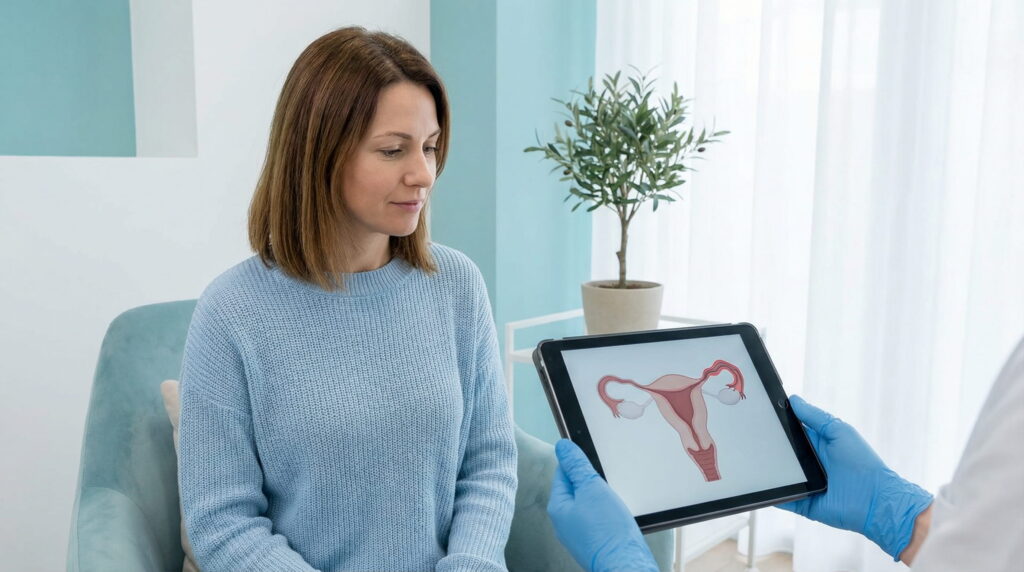
HHSG (Hysterosalpingography): What It Is and What It Shows
HSG is a radiological investigation in which a contrast substance is introduced at the cervix, then radiography is used to follow how the uterine cavity becomes opacified and how the contrast passes through the tubes.
In simplified terms, HSG may suggest:
- whether the tubes appear patent (contrast “passes” and dispersion into the peritoneal cavity can be observed);
- whether there is a possible obstruction (contrast stops along the course);
- sometimes, whether the shape of the uterine cavity raises questions (although it is not a test dedicated exclusively to the uterus).
Within the evaluation plan, the result can quickly influence direction: sometimes toward treatments that increase the chances of natural conception, other times toward advanced procedures such as In Vitro Fertilization (IVF), when context indicates it.
Sono-HSG (HyCoSy/HyFoSy): What It Is and Who It May Suit
Sono-HSG is an ultrasound-based investigation in which a medium (solution/ultrasound contrast agent) is introduced into the uterus and its passage toward the tubes and indirectly toward the peritoneal cavity is followed by ultrasound.
Within Genesis Athens, this investigation is also described as a dedicated service: Sono-hysterosalpingography (HSG).
In many cases, Sono-HSG is appreciated because it is ultrasound-based and can be easily integrated into a complete gynecological evaluation, but the optimal choice depends on medical history and what needs to be clarified.
Other Options
There are also invasive methods (for example, laparoscopy with a patency test), which may become relevant when there are strong suspicions of adhesions, endometriosis or when non-invasive test results are inconclusive and the therapeutic decision depends on confirmation. In most cases, however, fallopian tube testing starts with non-invasive or minimally invasive methods and subsequent steps are established depending on the result.
HSG vs Sono-HSG: How the Choice Is Made in Practice
Beyond technical differences, selection between HSG and Sono-HSG usually starts from medical history, availability, tolerance to discomfort and what information must be obtained quickly.
In short, the comparison can be understood as follows:
- HSG uses radiology and contrast, with a typical radiographic visualization of the course.
- Sono-HSG uses ultrasound and an ultrasound contrast medium, with ultrasound assessment of passage.
In practice, regardless of method, the goal remains the same: fallopian tube testing in the safest and most relevant way for next decisions.
“You deserve to be heard, seen, treated with respect and supported throughout your life.”

Andreas Vythoulkas
Specialist in Obstetrics and Gynecology


Preparation for Fallopian Tube Testing
Correct preparation increases comfort and reduces risks. In addition, it helps keep the result as “clean” as possible, without factors that can create misleading interpretations.

A Few Days Before
Usually, the physician establishes:
- the exact cycle window for the investigation;
- whether tests or sampling are needed (depending on context);
- recommendations related to medication (if there are ongoing treatments).
On the Day of the Procedure and Immediately After
It is normal for some people to describe discomfort similar to menstrual cramps. Sometimes light discharge or spotting may occur in the next 24–48 hours, depending on the method and individual particularities.
Bullet points are useful here, as a pragmatic checklist (without overloading the rest of the article):
- A light meal beforehand is generally recommended, unless the physician indicates otherwise.
- It may be useful to have an absorbent pad for after the procedure.
- In the first few hours, a lighter schedule may be preferable, especially if discomfort appears.
- If fever, intense pelvic pain, foul-smelling discharge or significant bleeding occur, contacting the physician promptly is recommended, because these are not “usual” manifestations after fallopian tube testing.
What Follows After the Result: Interpretation by Scenarios
The real value of fallopian tube testing appears when the result is put into context: age, duration of infertility, ovulation evaluation, gynecological history, semen analysis and possible uterine pathologies.storicul ginecologic, spermograma și eventualele patologii uterine.

1) Bilaterally Patent Tubes
When the tubes appear patent, usually the infertility evaluation continues or an already started plan is refined. In many cases, attention shifts toward:
- confirming ovulation and luteal phase quality;
- evaluating the uterine cavity (if not already clarified);
- semen analysis and, when needed, additional evaluations.
At this stage, some couples prefer to go through a broader resource about IVF steps, to understand options logically if they become necessary: In Vitro Fertilization (IVF) – complete guide.
2) Unilateral Obstruction
One possibly blocked tube does not automatically mean that conception is impossible, but it can reduce chances or suggest a more complex context (adhesions, prior inflammation). Sometimes, the physician recommends confirmation or an alternative investigation, especially if there are inconsistencies with the rest of the evaluation.
3) Bilateral Obstruction (Suspicion of Blocked Tubes)
This scenario can have a greater impact on treatment strategy. Depending on cause and the overall picture, several directions may exist: confirmation by another method, evaluation for interventions targeting the tubal factor or orientation toward assisted reproduction procedures.
In situations where surgical options or specific tubal-factor solutions are discussed, fallopian tube recanalization may become relevant, insofar as the physician considers it appropriate for the specific case.
4) Inconclusive Result or Suspicion of “Tubal Spasm”
Sometimes, especially with HSG, there can be a transient spasm that “mimics” obstruction. In such situations, the prudent approach is not to draw definitive conclusions from a single test and the physician may recommend repeating the test, using another method or correlating with other investigations.
Frequently Asked Questions
What does fallopian tube testing mean, concretely?
In essence, fallopian tube testing assesses whether the tubes allow fluid to pass, suggesting that they are patent. The result helps guide investigations and treatment options, especially when a tubal factor is suspected.
Is fallopian tube testing painful?
Discomfort varies. Some people feel moderate cramps, others describe minimal discomfort. Intensity depends on individual sensitivity, technique and anatomical particularities.
What is the difference between HSG and Sono-HSG for fallopian tube testing?
Both are used for fallopian tube testing, but HSG uses radiology and contrast, while Sono-HSG uses ultrasound and an ultrasound contrast medium. The physician recommends the method depending on context and the necessary information.
Can you try to conceive in the month when fallopian tube testing is performed?
In many situations, yes, but the recommendation is individual and depends on the method used, cycle timing and what is observed during the procedure. It is important that the final recommendation is established by the treating physician.
If the result shows blocked tubes, does that definitely mean there are no chances?
Not necessarily. Sometimes false positives can occur or situations that require confirmation. In addition, strategy depends on obstruction type, cause and the rest of the evaluation. The physician may propose additional steps before a final conclusion.
If only one tube is blocked, what options exist?
Options depend on age, duration of infertility, ovulation and semen analysis. Sometimes natural attempts continue or methods to increase chances are used, other times a more advanced plan is recommended. Correct interpretation of fallopian tube testing results is essential.
Are there risks after fallopian tube testing?
Risks are generally low, but may include discomfort, light bleeding, rarely infection or unpleasant reactions depending on method. Signs that require rapid medical contact include fever, intense pain or abnormal discharge.
When does it make sense to discuss IVF directly after fallopian tube testing?
Usually, when bilateral obstruction is suspected and confirmed, when there are other associated factors or when time becomes an important factor. For a complementary perspective oriented toward the patient pathway, the material on In Vitro Fertilization (IVF) – patient experience may also be useful.

Why Choose Genesis Athens for Fallopian Tube Testing
In infertility context, fallopian tube testing has real value when the investigation is chosen correctly, performed under safe conditions and interpreted within the full evaluation. At Genesis Athens, the focus remains on a rigorous clinical approach, clear communication and next steps that are medically well justified.
In addition to the information presented here, for readers and couples who want an external (but coherent) perspective on the same services, there are also the corresponding pages on Dr. Andreas Vythoulkas’ medical platform: sono-hysterosalpingography (HSG), fallopian tube recanalization and In Vitro Fertilization (IVF).
Talk to a specialist about
fallopian tube testing

Sources:
Fallopian Tube Patency Testing: Methods (HSG, Sono-HSG), Preparation and What Follows After the Result
Specialist in Obstetrics and Gynecology
Similar Articles

Supportive Treatment in Pregnancy After IVF: What It May Include and How Long It Lasts
Specialist in Obstetrics and Gynecology

Fertilization of Eggs and Embryo Culture in IVF: How It Takes Place in the Laboratory
Specialist in Obstetrics and Gynecology

Intrauterine Insemination: Price, What It Includes and What Can Vary
Specialist in Obstetrics and Gynecology